
BC Conservation Data Centre: Conservation Status Report
Thamnophis elegans
Terrestrial Gartersnake
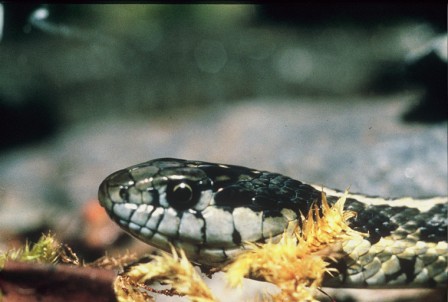
| Scientific Name: | Thamnophis elegans |
|---|---|
| English Name: | Terrestrial Gartersnake |
| English Name Synonyms: |
Western Terrestrial Garter Snake
|
| Provincial Status Summary | |
| Status: | S5 |
| Date Status Assigned: | |
| Date Last Reviewed: | March 28, 2025 |
| Reasons: | This species is known throughout the southern half of BC, and although there are many low-level threats, there are no major ones identified. |
| Range | |
| Range Extent: | G = 200,000-2,500,000 square km |
| Range Extent Estimate (km2): | 603, 239 |
| Range Extent Comments: | Found throughout the southern half of the province, from Vancouver Island to the Alberta border and as far north as Chetwynd in the Peace River district and the Nass River on the coast (Matsuda et al. 2006, GBIF; accessed 26 January 2025). |
| Area of Occupancy (km2): | G = 501-2,500 |
| Area of Occupancy Estimate (km2): | 3984 |
| Area of Occupancy Comments: | Estimated via GBIF (accessed 26 January 2025) and calculated as 996 4km2 grid cells using GeoCat (https://geocat.iucnredlist.org/editor). |
| Occurrences & Population | |
| Number of Occurrences: | E = > 300 |
| Comments: | This is based on verified records in GBIF (accessed 26 January 2025). |
| Number of Occurrences with Good Viability / Ecological Integrity: | Rank Factor not assessed |
| Number of Occurrences Appropriately Protected & Managed: | U = Unknown |
| Comments: | Likely some protected in parks. |
| Population Size: | U = Unknown |
| Threats (to population, occurrences, or area affected) | |
| Degree of Threat: | D = Low |
| Comments: |
Road mortality and climate change (i.e., shifting habitats, especially loss of wetlands, and loss of prey base due to droughts and temperature extremes) were identified as primary threats for this species. The species' range overlaps with the geographic area of the province that has extensive land use for agriculture and forestry, a variety of non-native vertebrate predators in aquatic habitats, and relatively high development pressure. However, it is a generalist that occurs in and exploits a variety of habitat types and elevations and is adaptable to habitat change. Pollutants may affect the species (e.g., bioaccumulate toxins via their prey), but the extent of impacts are unknown. Details for the comments for each of the scored categories are added here. 4.1 Roads and 4.2 Utility and Service Lines Impact Score: Low. Scope: The exposure of T. elegans to roads, and thus potential for roadkill, is variable across their broad range (e.g., Lower Mainland vs. inland BC). Wide distribution dilutes this threat. Severity: T. elegans cover large distances over the active season, and many encounter roads. Colubrid snakes move hundreds of meters to kilometers away from dens sites (Macartney et al. 1988). The species is commonly observed alive and dead on roads (approximately 21% of the 1780 T. elegans observations in iNaturalist for BC were of snakes on roads; Wind, pers. obs.), but no studies have determined road mortality rates for the species. No road studies for T. elegans specifically, however roads alter T. sirtalis movement patterns and make it more difficult for males to find mates (Shine et al. 2004). Fewer T. sirtalis were captured at sites with higher road densities in ON (Gigeroff 2022). T. sirtalis may be attracted to edge habitat near roads (Wagner et al. 2021), but not in all landscapes (Patrick and Gibbs 2009). T. elegans will use underpasses when available (Pagnucco et al. 2011), but underpasses may not be effective where road crossing locations are occur over a broad area (i.e., are not localized; Wagner et al. 2021). Negative effects are likely greatest where roads occur near critical habitat, such as overwintering dens. Blasting of a rocky outcrop in ID for road construction, the latter of which was used by T. elegans for overwintering, resulted in direct mortalities and no further observations of the species in the area (Andrews et al. 2006). Thamnophis spp. use of rocky outcrops along roadways in BC as hibernaculum (Van Damme 2009), however entire populations are likely not lost. 11.1 Habitat Shifts and Alterations: Impact Score: Low. Across BC is experiencing regular heat waves and droughts, which is affecting hydrology and aquatic habitats. Severity: Climate change is expected to affect wetlands in the southern interior as a result of climate change (Bunnell et al. 2011), and these are important foraging areas for T. elegans. From 1992 ? 2012, the total number and surface water area of ponds across south-central BC decreased by 63% and 54% respectively due to decreased snow pack and increased temperature/evaporation (Coelho 2015). There is a complex interaction between snowpack, precipitation in spring and summer, air temperature affecting water temperature in shallow ponds, and hydroperiod. 11.2 Droughts. Impact Score: Low. Throughout this species? range in BC, there are increasing periods of drought. The impact has not been studied in B.C., however elsewhere the amount of precipitation received in spring in California affected the immune response of T. sirtalis and T. elegans (e.g., dry periods may reduce their resistance to disease and parasites); thus they may reflect a greater vulnerability to repeat drought events (Combrick et al. 2021). However, the population im |
| Trend (in population, range, area occupied, and/or condition of occurrences) | |
| Short-Term Trend: | U = Unknown |
| Comments: | Extent of occurrence and area of occupancy are probably are relatively stable. The population size is unknown as are the trends. There are anecdotal reports of population fluctuations. One long term monitoring site declines were noted at a site in the Chilcotin (P. Gregory, pers. comm. 2008). |
| Long-Term Trend: | U = Unknown |
| Other Factors | |
| Intrinsic Vulnerability: | C=Not intrinsically vulnerable |
| Environmental Specificity: | CD = Moderate to broad. |
| Other Rank Considerations: | |
| Information Gaps | |
| Research Needs: | |
| Inventory Needs: | |
| Stewardship | |
| Protection: | |
| Management: | |
| Version | |
| Author: | Ramsay, L. (2025), Gelling, L. (2017, 2011), Westereng, L. (2007) |
| Date: | January 24, 2025 |
| References | |
|
Andrews, K.M., J.W. Gibbons, and D.M. Jochimsen. 2006. Literature Synthesis of the Effects of Roads and Vehicles on Amphibians and Reptiles. Federal Highway Administration (FHWA), U.S. Department of Transportation, Report No. FHWA-HEP-08-005. Washington, D.C. 151 pp.
|
|
|
Bunnell, F.L., L.L. Kremsater, and R.W. Wells. 2011. Global weirding in British Columbia: Climate change and the habitat of terrestrial vertebrates. BC Journal of Ecosystems and Management 12(2): 21?38.
|
|
|
Coelho, A. 2015. Assessing Climate Change Induced Declines in Ponds in British Columbia's Semi-arid Grasslands. MSc Thesis Thompsons River University
|
|
|
Combrink, L.L., A.M. Bronikowski, D.A.W. Miller, and A.M. Sparkman. 2022. Current and time-lagged effects of climate on innate immunity in two sympatric snake species. Ecology and Evolution 11(7):3239-3250.
|
|
|
GBIF.org. 2025k. GBIF. Occurrence download for Thamnophis elegans. Accessed 26 January 2025.
|
|
|
Gigeroff, A. 2022. Do roads affect the abundance of garter snakes (Thamnophis sirtalis) and redbelly snakes (Storeria occipitomaculata)? Masters Thesis. University of Ottawa, Ottawa, ON. 54 pp.
|
|
|
Markle, C.E., P.A. Moore, and J.M. Waddington. 2020. Temporal variability of overwintering conditions for a species-at-risk snake: Implications for climate change and habitat management. Global Ecology and Conservation 22(June 2020):1-9.
|
|
|
Matsuda, B.M., D.M. Green and P.T. Gregory. 2006. Royal BC Museum handbook amphibians and reptiles of British Columbia. Royal B.C. Mus., Victoria, BC. 266pp.
|
|
|
Pagnucco, K.S., C.A. Paszkowski, and G.J. Scrimgeour. 2011. Using cameras to monitor tunnel use by Long-toed Salamanders (Ambystoma macrodactylum): an informative, cost-efficient technique. Herprtological Conservation and Biology 6(2):277-286.
|
|
|
Patrick, D.A., and J.P. Gibbs. 2009a. Snake occurrences in grassland associated with road versus forest edges. Journal of Herpetology 43(4), 716-720.
|
|
|
Shine, R., and R.T Mason. 2004. Patterns of mortality in a cold-climate population of garter snakes (Thamnophis sirtalis parietalis). Biological Conservation 120(2):201-210.
|
|
|
Van Damme, L.M. 2009. Melanstic Wandering Gartersnake (Thamnophis elegans vagrans) and discovery of a hibernaculum in the Creston Valley, British Columbia. Wildlife Afield. Dec. 2009:164-165.
|
|
|
Wagner, R.B., C.R. Brune, and V.D. Popescu. 2021. Snakes on a lane: Road type and edge habitat predict hotspots of snake road mortality. Journal for Nature Conservation. Volume 61, June 2021, 125978.
|
|
|
White, R.H., S. Anderson, J.F. Booth, G. Braich, C. Draeger, C. Fei, C.D. G. Harley, S.B. Henderson, M. Jakob, C-A. Lau, L.M.Admasu, V. Narinesingh, C. Rodell, E. Roocroft, K.R. Weinberger and G. West. 2023. The Unprecedented Pacific Northwest Heatwave of June 2021. Nature Communications 14(727):1-20.
|
|
Please visit the website Conservation Status Ranks for information on how the CDC determines conservation status ranks. For global conservation status reports and ranks, please visit the NatureServe website http://www.natureserve.org/.
Suggested Citation:
B.C. Conservation Data Centre. 2025. Conservation Status Report: Thamnophis elegans. B.C. Minist. of Environment. Available: https://a100.gov.bc.ca/pub/eswp/ (accessed Jun 15, 2026).