
BC Conservation Data Centre: Species Summary
Sciurus carolinensis
Eastern Grey Squirrel
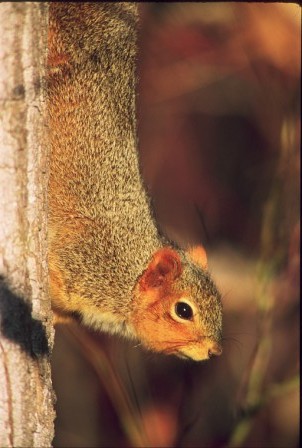
| Scientific Name: | Sciurus carolinensis Gmelin, 1788 | ||||||||||
|---|---|---|---|---|---|---|---|---|---|---|---|
| English Name: | Eastern Grey Squirrel | ||||||||||
| Classification / Taxonomy | |||||||||||
| Scientific Name - Concept Reference: | Wilson, D. E., and D. M. Reeder (editors). 1993. Mammal species of the world: a taxonomic and geographic reference. Second edition. Smithsonian Institution Press, Washington, DC. xviii + 1206 pp. Available online at: http://www.nmnh.si.edu/msw/. | ||||||||||
| Classification Level: | Species | ||||||||||
| Species Group: | Vertebrate Animal | ||||||||||
| Species Code: | M-SCCA | ||||||||||
|
|||||||||||
| Conservation Status / Legal Designation | |||||||||||
| Global Status: | G5 (Apr 2016) | ||||||||||
| Provincial Status: | SNA (Mar 2024) | ||||||||||
| BC List: | Exotic | ||||||||||
| Provincial FRPA list: | |||||||||||
| Provincial Wildlife Act: | |||||||||||
| COSEWIC Status: | |||||||||||
| SARA Schedule: | |||||||||||
| General Status Canada: | 4 - Secure (2005) | ||||||||||
| Ecology & Life History | |||||||||||
| General Description: | |||||||||||
| Global Reproduction Comments: | In Illinois, most breeding occurs in December-February and May-June; slightly later in more northern latitudes (see Koprowski 1994). One or two litters/year. First litter is produced mostly in February-March, sometimes as early as January in some areas; second litter, July or August. Gestation lasts 44 days. Litter size most often is 2-3. Young are tended by female. Weaning is completed at about 10-12 weeks (in spring and/or late summer-early fall). Most breed as yearlings, sometimes sooner (as early as 5 months) or later. Reproductive output, including the percentage of adults that produce young and the number of litters/year, is positively correlated with mast abundance. Maximum reproductive longevity is about a decade. | ||||||||||
| Global Ecology Comments: |
Fall density generally ranges from 0.5 to 14/ha, but 3.2/ha generally is considered high for extensive forested tracts; densities of 21/ha or more may occur in city parks; populations tend to increase after bumper mast crops, decrease if mast crop fails (Teaford 1986). May aggregate at abundant food sources. Home range averages 0.5-10 ha, with older males tending to have the largest ranges (Teaford 1986); usually home range is less than 5 ha (see Koprowski 1994). Not territorial, home range overlap is extensive; social system is characterized by a linear dominance hierarchy. Disperses up to a few kilometers from natal area upon approaching sexual maturity. Large-scale one-way emigrations have been observed, generally coinciding with high population density and mast crop failure. Taken by many predators, but predation does not appear to limit populations (Teaford 1986). Mean annual mortality reported for adults is 42-57% (Koprowski 1994). |
||||||||||
| Migration Characteristics: (Global / Provincial) | |||||||||||
|
Nonmigrant: Local Migrant: Distant Migrant: Within Borders Migrant: |
Y / N / N / na / |
||||||||||
| Global Migration Comments: | Massive movements may occur in some years. | ||||||||||
| Habitats: (Type / Subtype / Dependence) |
Anthropogenic / Urban/Suburban / Unknown
Forest / Conifer Forest - Dry / Unknown Forest / Conifer Forest - Mesic (average) / Unknown Forest / Conifer Forest - Moist/wet / Unknown Riparian / Riparian Forest / Unknown |
||||||||||
| Global Habitat Comments: | Prefers mature deciduous and mixed forests with abundant supplies of mast (e.g., acorns, hickory nuts). A diversity of nut trees is needed to support high densities. Also uses city parks and floodplains. Seldom far from permanent open water. In southern Alabama, narrow bands of hardwoods along ephemeral streams were an important component of the habitat in even-aged pine and mixed pine-hardwood stands (Fischer and Holler 1991). Rests in tree cavity or leaf nest; leaf nests apparently are made primarily by dispersing juveniles 18-19 weeks old. Nests in tree cavities or in leaf nests, usually 25 feet or more above ground. Most winter-spring litters are born in tree cavities, most spring-summer litters in leaf nests (Teaford 1986). Cavities suitable for nesting are dry, 15-25 cm in diameter, 40-50 cm deep, with an entrance hole about 8 cm in diameter (Teaford 1986). Females may move young from tree cavity nest to leaf nest, possibly to escape fleas. | ||||||||||
| Food Habits: |
Frugivore: Adult, Immature
Granivore: Adult, Immature Invertivore: Adult, Immature |
||||||||||
| Global Food Habits Comments: | Diet consists of seeds, fruits, nuts, fungi, occasional insects and small vertebrates (e.g., bird eggs). Scatterhoarder; buries nuts and acorn in fall for later consumption (winter-spring). | ||||||||||
| Global Phenology: |
Diurnal: Adult, Immature
|
||||||||||
| Global Phenology Comments: | Active during the day, particularly in the morning and late afternoon, though unimodal activity may occur in winter. May be inactive for a day or two during extremely cold, snowy weather. | ||||||||||
| Provincial Phenology: (1st half of month/ 2nd half of month) |
|||||||||||
| Colonial Breeder: | N | ||||||||||
| Length(cm)/width(cm)/Weight(g): | 50/ / 710 | ||||||||||
| Elevation (m) (min / max): |
Global:
Provincial: |
||||||||||
| Distribution | |||||||||||
| Endemic: | N | ||||||||||
| Global Range Comment: | Eastern U.S. and adjacent southern Canada; southern Quebec to Manitoba, south to eastern Texas and Florida. Range has been extended through introductions into Quebec, Ontario, New Brunswick, Manitoba, Saskatchewan, British Columbia, Nova Scotia, California, Oregon, Washington, and Montana (Teaford 1986, Koprowski 1994). Introduced also in the British Isles, Italy, South Africa, and Australia (extirpated by 1973) (see Koprowski 1994). | ||||||||||
| Authors / Contributors | |||||||||||
| Global Information Author: | Hammerson, G. | ||||||||||
| Last Updated: | Feb 03, 1995 | ||||||||||
| Provincial Information Author: | |||||||||||
| Last Updated: | |||||||||||
| References and Related Literature | |||||||||||
Baker, R. H. 1983. Michigan mammals. Michigan State University Press. 642 pp. |
|||||||||||
Baker, R.H. 1959. The gray squirrel-past, present, and future, pp. 390-392. in V. Flyger, Ed. Symposium on the graysquirrel. Maryland Dept. Res. and Ed., Contr. No. 162, pp. 356-407. |
|||||||||||
Banfield, A. W. F. 1974. The mammals of Canada. University of Toronto Press, Toronto, Canada. 438 pp. |
|||||||||||
Barkalow, F.S. and M. Shorten. 1973. The World of the Gray Squirrel. J.B. Lippincott Co. Philadelphia, PA. 160 pp. |
|||||||||||
Doebel, J., and B. McGinnes. 1974. Home range and activity of a gray squirrel population. Journal of Wildlife Management 38:860-67. |
|||||||||||
Fischer, R. A., and N. R. Holler. 1991. Habitat use and relative abundance of gray squirrels in southern Alabama. J. Wildl. Manage. 55:52-59. |
|||||||||||
Flyger, V. F. 1959. A comparison of methods for estimating squirrel populations. J. Wildl. Manage. 23:220-223. |
|||||||||||
Flyger, V., and J. E. Gates. 1982. Fox and gray squirrels. Pages 209-229 in J. A. Chapman and G. A. Feldhamer, editors. Wild mammals of North America: biology, management, and economics. Johns Hopkins Univ. Press, Baltimore. |
|||||||||||
Godin, A. J. 1977. Wild mammals of New England. Johns Hopkins University Press, Baltimore. 304 pp. |
|||||||||||
Gurnell, J. 1987. The natural history of squirrels. Facts on File Publications, New York. 201 pp. |
|||||||||||
Hafner, M. S., L. J. Barkley, and J. M. Chupasko. 1994. Evolutionary genetics of New World tree squirrels (tribe Sciurini). J. Mamm. 75:102-109. |
|||||||||||
Hall, E. R. 1981a. The Mammals of North America, second edition. Vols. I & II. John Wiley & Sons, New York, New York. 1181 pp. |
|||||||||||
Hamilton, W. J., Jr., and J. O. Whitaker, Jr. 1979. Mammals of the eastern United States. Cornell Univ. Press, Ithaca, New York. 346 pp. |
|||||||||||
Koprowski, J. L. 1994. Sciurus carolinensis. Am. Soc. Mamm., Mammalian Species No. 480:1-9. |
|||||||||||
Longley, W.H. and ? 1963. Minnesota gray and fox squirrels. Am. Midl. Nat. 69(1):82-89. |
|||||||||||
Moncrief, N. D. 1993. Geographic variation in fox squirrels (SCIURUS NIGER) and gray squirrels (S. CAROLINENSIS) of the lower Mississippi River valley. J. Mamm. 74:547-576. |
|||||||||||
Nixon, C. M., and L. P. Hansen. 1987. Managing forests to maintain populations of gray and fox squirrels. Illinois Dept. Conserv. Tech Bull. 5. 39 pp. |
|||||||||||
Pack, J.H. Mosby and P. Siegal. 1967. Influence of social hierarchy on gray squirrel behavior. J. Wildl. Mgmt. 31(4):720-728. |
|||||||||||
Schwartz, C. W., and E. R. Schwartz. 1981. The wild mammals of Missouri. University of Missouri Press, Columbia. 356 pp. |
|||||||||||
Teaford, J. W. 1986a. Squirrel nest boxes. Section 5.1.1, US Army Corps of Engineers Wildlife Resources Management Manual. Tech. Rep. EL-86-11. Waterways Expt. Station, Vicksburg, Mississippi. 15 pp. |
|||||||||||
Teaford, J. W. 1986b. Eastern gray squirrel (Sciurus carolinensis). Section 4.7.1, US Army Corps of Engineers Wildlife Resources Management Manual. Tech. Rep. EL-86-6. Waterways Expt. Station, Vicksburg, Mississippi. 36 pp. |
|||||||||||
Uhlig, H.G. 1955. The gray squirrel -- its life history, ecology, and population characterics in West Virginia. 175 pp. |
|||||||||||
Usher, M. B., T. J. Crawford, and J. L. Banwell. 1992. An American invasion of Great Britain: the case of the native and alien squirrel (SCIURUS) species. Conservation Biology 6:108-115. |
|||||||||||
Williamson, S. J. No date. Forester's guide to wildlife habitat improvement. Cooperative Extension Service, Univ. of New Hampshire. 56 pp. |
|||||||||||
Please visit the website Conservation Status Ranks for definitions of the data fields used in this summary report.
Suggested Citation:
B.C. Conservation Data Centre. 1995. Species Summary: Sciurus carolinensis. B.C. Minist. of Environment. Available: https://a100.gov.bc.ca/pub/eswp/ (accessed Oct 17, 2026).