
BC Conservation Data Centre: Species Summary
Recurvirostra americana
American Avocet
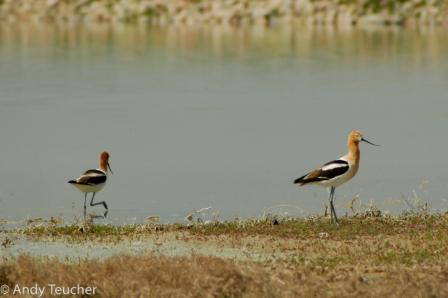
| Scientific Name: | Recurvirostra americana Gmelin, 1789 | ||||||||||
|---|---|---|---|---|---|---|---|---|---|---|---|
| English Name: | American Avocet | ||||||||||
| Classification / Taxonomy | |||||||||||
| Scientific Name - Concept Reference: | American Ornithologists' Union (AOU). 1998. Check-list of North American birds. Seventh edition. American Ornithologists' Union, Washington, D.C. [as modified by subsequent supplements and corrections published in The Auk]. Also available online: http://www.aou.org/. | ||||||||||
| Classification Level: | Species | ||||||||||
| Species Group: | Vertebrate Animal | ||||||||||
| Species Code: | B-AMAV | ||||||||||
|
|||||||||||
| Conservation Status / Legal Designation | |||||||||||
| Global Status: | G5 (Apr 2016) | ||||||||||
| Provincial Status: | S2S3B (Apr 2023) | ||||||||||
| BC List: | Blue | ||||||||||
| Provincial FRPA list: | |||||||||||
| Provincial Wildlife Act: | |||||||||||
| COSEWIC Status: | |||||||||||
| SARA Schedule: | |||||||||||
| General Status Canada: | 4 - Secure (2005) | ||||||||||
| Migratory Bird Convention Act: | Y | ||||||||||
| Ecology & Life History | |||||||||||
| General Description: | A large slender shorebird with a long, slender, recurved bill (longer and straighter in males than in females), long spindly legs, and a long neck; wings and back are boldly patterned with black and white; belly and flanks are white; head and neck and rusty in breeding plumage, gray in basic plumage; juveniles have a cinnamon wash on the head and neck; average length 46 cm (NGS 1983). | ||||||||||
| Global Reproduction Comments: | Breeding begins in mid-April in the south, as late as mid-May in the north. Clutch size usually is 3-4. Incubation lasts 23-25 days, by both sexes. Young are precocial, tended by both adults, independent in about 6 weeks. Nests usually in a loose colony. | ||||||||||
| Migration Characteristics: (Global / Provincial) | |||||||||||
|
Nonmigrant: Local Migrant: Distant Migrant: Within Borders Migrant: |
Y / Y / Y / na / |
||||||||||
| Global Migration Comments: | May be nonmigratory in certain southern portions of range. Northern interior breeding populations make extensive seasonal migrations. Migrates mainly through western U.S. At Humboldt Bay California, arrives late-August to mid-November, departs February to late April and early May (Evans and Harris 1994). | ||||||||||
| Habitats: (Type / Subtype / Dependence) |
Lakes / Lake / Facultative - frequent use
Lakes / Pond/Open Water / Facultative - frequent use Ocean / Intertidal Marine / Facultative - occasional use Other Unique Habitats / Alkali Ponds/Salt Flats / Facultative - frequent use Other Unique Habitats / Estuary / Facultative - occasional use Wetland / Bog / Facultative - frequent use Wetland / Fen / Facultative - frequent use Wetland / Marsh / Facultative - frequent use Wetland / Swamp / Facultative - frequent use |
||||||||||
| Global Habitat Comments: |
Lowland marshes, mudflats, ponds, alkaline lakes, and estuaries (AOU 1983). At Humboldt Bay, California, wintering birds used intertidal mud flats (mainly for for feeding and resting), a sewage oxidation pond (mainly for feeding and secondarily as a source of fresh water), high elevation mud flats (early high tide roost), and islands in a brackish lake (primary high tide roost); typically roosted on shallow, submerged bars of islands in deep nontidal ponds or less often in shallow water or on exposed mud near the water's edge of tidal mud flats (Evans and Harris 1994). Availability of sewage oxidation pond at Humboldt Bay enhanced habitat; the wintering population increased from 30-35 in 1960 (before pond construction) to 500-800 in the 1980s (after pond construction) (Evans and Harris 1994). In coastal South Carolina, most nonbreeding birds used habitats with water 10-17 cm deep (and relatively stable level) and little or no exposed substrate; among several brackish ponds, salinity was not an important factor in habitat selection (Boettcher et al. 1995). Usually nests on open flats or areas with scattered tufts of grass on islands or along lakes (especially alkaline) and marshes. Readily nests on artificial islands (such as those created for waterfowl) in impoundments (Giroux 1985). In Northwest Territories, Kuyt and Johns (1992) found two instances of avocet eggs in gull nests. |
||||||||||
| Food Habits: |
Invertivore: Adult, Immature
|
||||||||||
| Global Food Habits Comments: | Walks slowly through the water; often feeding in flocks that number 12-300 birds. Eats a variety of aquatic insects and their larvae, crustaceans, and seeds of aquatic plants, obtained mainly from soft muddy bottom or water surface. May extend head, or dive, under surface of water while feeding. During fall-winter-spring at Humboldt Bay, California, foraged on intertidal mud flats within 3 km of roosts, usually within 100 m of tide edge, most often when tide levels were between 0.5 and 1.2 m Mean Lower Low Water; in October, fed mainly at sewage oxidation ponds with concentrations of invertebrate prey (Evans and Harris 1994). | ||||||||||
| Global Phenology: |
Diurnal: Adult, Immature
|
||||||||||
| Provincial Phenology: (1st half of month/ 2nd half of month) |
|||||||||||
| Colonial Breeder: | Y | ||||||||||
| Length(cm)/width(cm)/Weight(g): | 46/ / 316 | ||||||||||
| Elevation (m) (min / max): |
Global:
Provincial: |
||||||||||
| Distribution | |||||||||||
| Endemic: | N | ||||||||||
| Global Range Comment: | BREEDING: Northwest Territories (Kuyt and Johns 1992), southeastern British Columbia, central Alberta, southern Saskatchewan, southwestern Manitoba, southwestern Ontario, and Minnesota south locally to southern California, central Nevada, northern Utah, south-central Colorado, southern New Mexico, and San Luis Potosi, east to central Kansas and coastal Texas. Nonbreeders often in usual winter range in summer. NON-BREEDING: from California and southern Texas south through Mexico, casually to Guatemala, Belize, Honduras, and Costa Rica, locally in southern Florida. | ||||||||||
| Authors / Contributors | |||||||||||
| Global Information Author: | HAMMERSON, G. | ||||||||||
| Last Updated: | Apr 01, 1996 | ||||||||||
| Provincial Information Author: | |||||||||||
| Last Updated: | |||||||||||
| References and Related Literature | |||||||||||
Gyug, L.W. and J.T. Weir. 2017b. American Avocet breeding habitat, behaviour and use of nesting platforms at Kelowna, British Columbia. British Columbia Birds 27:13?29. |
|||||||||||
American Ornithologists' Union (AOU). 1983. Check-list of North American Birds, 6th edition. Allen Press, Inc., Lawrence, Kansas. 877 pp. |
|||||||||||
Boettcher, R., S. M. Haig, and W. C. Bridges, Jr. 1995. Habitat-related factors affecting the distribution of nonbreeding American avocets in coastal South Carolina. Condor 97:68-81. |
|||||||||||
Campbell, R.W., N.K. Dawe, I. McTaggart-Cowan, et al. 1990b. The Birds of British Columbia Vol. 2: Nonpasserines: Diurnal Birds of Prey through Woodpeckers. Royal British Columbia Museum, Victoria, BC. |
|||||||||||
Evans, T. J., and S. W. Harris. 1994. Status and habitat use by American avocets wintering at Humboldt Bay, California. Condor 96:178-189. |
|||||||||||
Gebauer, M.B. 2000. Status of the American Avocet in British Columbia. B.C. Minist. Environ., Lands and Parks, Wildl. Branch. Working rep. WR-98. 34pp. |
|||||||||||
Giroux, J.-F. 1985. Nest sites and superclutches of American avocets on artificial islands. Can. J. Zool. 63: 1302-1305. |
|||||||||||
Godfrey, W.E. 1966. The birds of Canada. National Museums of Canada. Ottawa. 428 pp. |
|||||||||||
Harrison, C. 1978. A Field Guide to the Nests, Eggs and Nestlings of North American Birds. Collins, Cleveland, Ohio. |
|||||||||||
Kuyt, E., and B. W. Johns. 1992. Recent American avocet, RECURVIROSTRA AMERICANA, breeding records in the Northwest Territories, with notes on avocet parasitism of mew gull, LARUS CANUS, nests. Can. Field-Nat. 106:507-510. |
|||||||||||
Morrison, R. I. G., R. E. Gill, Jr., B. A. Harrington, S. Skagen, G. W. Page, C. L. Gratto-Trevor, and S. M. Haig. 2001. Estimates of shorebird populations in North America. Occasional Paper Number 104, Canadian Wildlife Service, Environment Canada, Ottawa, ON. 64 pages. |
|||||||||||
National Geographic Society (NGS). 1983. Field guide to the birds of North America. National Geographic Society, Washington, DC. |
|||||||||||
Oberholser, H.C. 1974. The bird life of Texas. 2 vols. Univ. of Texas Press, Austin. |
|||||||||||
Terres, J. K. 1980. The Audubon Society encyclopedia of North American birds. Alfred A. Knopf, New York. |
|||||||||||
Please visit the website Conservation Status Ranks for definitions of the data fields used in this summary report.
Suggested Citation:
B.C. Conservation Data Centre. 1996. Species Summary: Recurvirostra americana. B.C. Minist. of Environment. Available: https://a100.gov.bc.ca/pub/eswp/ (accessed Jun 10, 2026).