
BC Conservation Data Centre: Species Summary
Accipiter cooperii
Cooper's Hawk
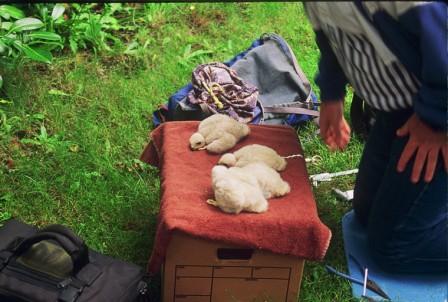
| Scientific Name: | Accipiter cooperii (Bonaparte, 1828) | ||||||||||
|---|---|---|---|---|---|---|---|---|---|---|---|
| English Name: | Cooper's Hawk | ||||||||||
| Classification / Taxonomy | |||||||||||
| Scientific Name - Concept Reference: | American Ornithologists' Union (AOU). 1998. Check-list of North American birds. Seventh edition. American Ornithologists' Union, Washington, D.C. [as modified by subsequent supplements and corrections published in The Auk]. Also available online: http://www.aou.org/. | ||||||||||
| Classification Level: | Species | ||||||||||
| Species Group: | Vertebrate Animal | ||||||||||
| Species Code: | B-COHA | ||||||||||
|
|||||||||||
| Conservation Status / Legal Designation | |||||||||||
| Global Status: | G5 (Apr 2016) | ||||||||||
| Provincial Status: | S5 (Mar 2015) | ||||||||||
| BC List: | Yellow | ||||||||||
| Provincial FRPA list: | |||||||||||
| Provincial Wildlife Act: | |||||||||||
| COSEWIC Status: | Not at Risk (May 1996) | ||||||||||
| SARA Schedule: | |||||||||||
| General Status Canada: | 4 - Secure (2005) | ||||||||||
| Migratory Bird Convention Act: | |||||||||||
| Ecology & Life History | |||||||||||
| General Description: | A medium-size diurnal raptor with rounded wings, a long brown/black banded tail (often rounded at the end), and a hooked bill; adult is mainly gray/brown above, barred rusty brown below, with strong contrast between dark crown and paler nape and back; immature is paler, with brown upperparts, dark-streaked whitish or buffy underparts, and white undertail coverts. Average length 36-51 centimeters, wingspan 74-94 centimeters; females average larger than males (NGS 1983). | ||||||||||
| Global Reproduction Comments: |
The breeding season usually begins in early April and extends through May and June (Bent 1937, Brown and Amadon 1968). The annual molt begins in late June but can occur as late as October (Bent 1937). Southward migration commences in the northern states in late August, with September being the peak month; it is essentially over by November. Northward migration occurs from late February to early April (Brown and Amadon 1968). The male does most of the nest building and occasionally some of the incubation; most of the incubation is done by the female, which seldom leaves the nest before the young have fledged (Brown and Amadon 1968). During the pre-fledging period the male provides both the female and the young with food, while both parents feed the young for up to four weeks after they leave the nest (Brown and Amadon 1968). Only one brood is raised each year. The normal clutch is four-five eggs, with clutches of three and six being rarely observed (Bent 1937). A national average has been calculated at 3.5 eggs (Bednarz et al. 1990). Replacement clutches are laid if the first set is lost, and laying can be delayed under conditions of low food availability (Bent 1937, Snyder and Wiley 1976). Hatching success data are limited, but in areas unaffected by DDT contamination the average hatching rate ranges from about 70% to 83% (Craighead and Craighead 1956, Johnsgard 1990), with some further reduction in the brood occurring after hatching. Normal fledging success rates range from 2.1 to 3.5 for pairs with successful nests (Craighead and Craighead 1956, Schriver 1969, Henny and Wight 1972, Reynolds and Wight 1978, Herron et al. 1985); roughly 80% of nests produce at least one fledgling (Henny and Wight 1972). In areas affected by DDT poisoning these figures were reported to be dramatically reduced. The young fledge one month after hatching, the males leaving the nest three-four days earlier than the larger females. They remain dependent on their parents until they are eight weeks of age and have learned to forage on their own (Brown and Amadon 1968). Only about 19% of the birds breed in their first year. Most nest by the second year and continue breeding throughout the rest of their lives. | ||||||||||
| Global Ecology Comments: |
Few data on population densities exist. Craighead and Craighead (1956) found 1554 hectares per pair in 1947-1948 in Michigan. In Maryland a density estimate of 200 hectares per pair was calculated by Stewart and Robbins (1958). Rosenfield et al. (1991) compiled nesting densities from various studies. These densities ranged from a low of 5000 hectares per pair in North Dakota in 1987, to a high of 331 hectares per pair in a pine plantation in southeastern Wisconsin in 1986. Strongly territorial. Males vigorously defend an area 30 meters in diameter around the nest site although they may forage up to 3.2 kilometers away (Brown and Amadon 1968). Johnsgard (1990) reported home range sizes that ranged from 105 to 784 hectares (the latter was seasonal home range; daily home range was 231 hectares). Nests are typically spaced 2.4 - 5.6 kilometers apart (Brown and Amadon 1968, Reynolds and Wight 1978, Kennedy 1980, Campbell et al 1990) and not usually less than one kilometer apart (Palmer 1988). The smaller sharp-shinned hawk also appears to keep similar distances from Cooper's hawk nests (Brown and Amadon 1968, Reynolds and Wight 1978), indicating interspecific aggression probably related to competition for food. Winter range is larger. Michigan birds ranged over areas of 2.4 - 3.2 kilometers in diameter. Dispersal range is limited. In Wisconsin, six males dispersed 4 - 35 kilometers (mean 12 kilometers) from natal site to nesting site; one female dispersed 14 kilometers (Rosenfield and Bielefeldt 1992). Hunt by a combination of still-hunting and searching flights along woodland edges and natural routes (Johnsgard 1990). Birds following inland migration routes apparently migrate over longer distances than those following coastal routes, and tend to have longer wings and tails, creating lower "flight-surface loading." This is thought to be an adaptation to the longer flight distances, more open country, and stronger thermal updrafts encountered along the inland routes (Smith et al. 1990). Mortality appears to be quite high during the birds' first winter, approaching 78% as opposed to only 34% per year for the adults 2 to 8 years old (Henny and Wight 1972). The maximum recorded lifespan is 8 years (Henny and Wight 1972). Life history traits place it intermediate for population turnover rate between the larger goshawk and smaller sharp-shinned hawk. This may partially explain the slower recovery of Cooper's from a population crash in the 1950s-1960s compared to sharp-shinned hawks (Bednarz et al. 1990). |
||||||||||
| Migration Characteristics: (Global / Provincial) | |||||||||||
|
Nonmigrant: Local Migrant: Distant Migrant: Within Borders Migrant: |
Y / Y / Y / na / |
||||||||||
| Global Migration Comments: | Northernmost populations migratory (move north mostly March-April, southward late August-early November) but regularly present throughout most of breeding range in winter. Migrates singly or in twos or threes (National Geographic Society 1983). See Palmer (1988) for more information. | ||||||||||
| Habitats: (Type / Subtype / Dependence) |
Alpine/Tundra / Alpine/Subalpine Meadow / Unknown
Anthropogenic / Urban/Suburban / Unknown Forest / Conifer Forest - Dry / Unknown Forest / Conifer Forest - Mesic (average) / Unknown Forest / Conifer Forest - Moist/wet / Unknown Forest / Deciduous/Broadleaf Forest / Unknown Forest / Mixed Forest (deciduous/coniferous mix) / Unknown Grassland/Shrub / Meadow / Unknown Riparian / Riparian Forest / Unknown |
||||||||||
| Global Habitat Comments: |
BREEDING: Primarily mature forest, either broadleaf or coniferous, mostly the former; also open woodland and forest edge (AOU 1983, Rosenfield and Bielefeldt 1993). Nests in both pine and hardwood groves, and riparian cottonwoods and sycamores in the West; Douglas-fir in northeastern Oregon. Usually builds new nest on horizontal limb near trunk or in crotch, 6-18 meters above ground; may modify old one or squirrel or crow nest. Campbell et al. (1990) reported one instance of a nest being reused for six consecutive years in British Columbia. Rosenfield and Bielefeldt (1992) found that nesting areas were irregularly reused by the same or different adults in subsequent years. In Nevada, Cooper's Hawks were frequently sighted in montane forests and pinyon-juniper woodlands, but riparian habitat was recorded as well (Floyd et al. 2007). In California, this species is seldom found in areas without dense tree stands, or patchy woodland habitat. It nests in deciduous trees in crotches 3-23 m (10-80 ft), but usually 6-15 m (20-50 ft), above the ground. It also nests in conifers on horizontal branches, in the main crotch, often just below the lowest live limbs. They usually nest in second-growth conifer stands, or in deciduous riparian areas, usually near streams. They frequent landscapes where wooded areas occur in patches and groves (Beebe 1974) and often use patchy woodlands and edges with snags for perching (CDFG 2011). Cooper's Hawks tend to use older, taller, and less dense woodlots than Sharp-shinned Hawks in California (Rosenfield and Bielefeldt 1993). In southern California, Cooper's Hawk generally favors extensive riparian bottomlands (Garrett and Dunn 1981). In Oregon, nests were in stands of conifers that included older and taller trees, a deeper crown, and a more open understory than a typical single-story Sharp-shinned Hawk nest stand (Reynolds et al. 1982). See also Grindrod and Walton Cooper's Hawk account at http://www.blm.gov/ca/pdfs/cdd_pdfs/coha.pdf. Generally is an inhabitant of deep woods, utilizing thick cover both for nesting and hunting. Openings, especially where hedgerows or windbreaks offer shelter for prey species, may also be used when foraging. Johnsgard (1990) states that Cooper's are less fussy about the forest type than sharp-shins, and are more often "associated with deciduous and mixed forests and open woodland habitats such as woodlots, riparian woodlands, semiarid woodlands of the southwest, and other areas where the woodlands tend to occur in patches and groves or as spaced trees." In the Northwest and Northeast, conifers are used for nesting (Bent 1937, Reynolds et al. 1982), but elsewhere the preference is for hardwoods (Brown and Amadon 1968). In the Northwest a preference may exist also for the cooler microclimates offered by north and east facing slopes (Reynolds et al. 1982). In that area, the Cooper's hawk is typically found in middle-aged stands, 50 - 60 years in age, whereas the sharp-shin prefers younger stands and the goshawk older ones (Reynolds et al. 1982). That difference might express competitive displacement, because in the East, where the goshawk rarely nests, the Cooper's hawk prefers mature stands (Brown and Amadon 1968). In some areas the species seems to require large tracts of forests and to avoid human contact, in others they may use small forest tracts, (e.g., British Columbia and Nevada), woodlots (e.g., Ohio) or urban/suburban areas where they seem tolerant of human activities (e.g., British Columbia, Utah, Wisconsin, Indiana) (Hennessy 1978, Herron et al. 1985, Campbell et al 1990, Peterjohn and Rice 1991, Rosenfield et al. 1991). In New Jersey-New York, nested mostly in mixed deciduous-coniferous forest with eastern hemlock the dominant coniferous species at many sites. Tended to nest in areas with relatively large basal area and more canopy cover. Nests located in live overstory trees (43% conifers), typically within the canopy, and always in dense forest but commonly near wetland openings or source of water, on level ground or lower slopes, typically several hundred meters from paved roads (but sometimes within 100 meters or less). Avoided southern exposures (Reynolds et al. 1982, Bosakowski et al. 1992). A recent study in Missouri documented numerous Cooper's Hawks nesting in young pine plantations in essentially the same habitat as sharp-shins. Also found that trees with deformed crowns were preferred (Wiggers and Kritz 1991). Rosenfield et al. (1991) report that pine plantations are important habitat for breeding Cooper's hawks throughout the Midwest, and particularly in Wisconsin. See Kennedy (1988) for details on nesting habitat in New Mexico. NON-BREEDING: Migrates mostly along ridges and coastlines (NGS 1983). Winter habitat is much the same as in the nesting season, although open woodlands and fields may be utilized to a greater extent. |
||||||||||
| Food Habits: |
Carnivore: Adult, Immature
|
||||||||||
| Global Food Habits Comments: | Eats medium-sized birds (e.g., starling, thrush, quail), sometimes small birds and some up to size of adult ruffed grouse, small ground-foraging mammals, occasionally reptiles (especially in southwestern U.S.) and amphibians. Their primary food is other birds; up to 90% of its diet is composed of avian prey, with mid-sized birds such as flickers and starlings being taken preferentially (Kennedy 1980). They are frequently important predators of bobwhites and were at least formerly, before the days of factory farming, raiders of domestic fowl. These food choices have led to a great deal of persecution by humans. Additional foods include small mammals, reptiles, amphibians, and insects (Bent 1937). In the southwest and west mammals and lizards can make up as much as half the food intake (Johnsgard 1990). Young birds comprise a large proportion of the food provided to nestlings. Typically hunts from inconspicuous perch, or uses a longer searching flight. Sometimes attracted to birds at feeders. Birds may not necessarily prevail in the diet (Bielefeldt et al. 1992). | ||||||||||
| Global Phenology: |
Diurnal: Adult, Immature
|
||||||||||
| Provincial Phenology: (1st half of month/ 2nd half of month) |
|||||||||||
| Colonial Breeder: | N | ||||||||||
| Length(cm)/width(cm)/Weight(g): | 51/ / 529 | ||||||||||
| Elevation (m) (min / max): |
Global:
Provincial: |
||||||||||
| Distribution | |||||||||||
| Endemic: | N | ||||||||||
| Global Range Comment: | BREEDING: southern British Columbia across southern Canada to central Saskatchewan, southern Quebec, and the Maritime Provinces, south to Baja California, northern Mexico (Chihuahua, Nuevo Leon), and southeastern U.S., though basically absent from the western Great Plains (AOU 1983, Rosenfield and Bielefeldt 1993). NON-BREEDING: Washington, Rocky Mountain states, southern Minnesota, southern Ontario, and New England south to Middle America (commonly to Honduras, rarely but regularly to Costa Rica, casually to Colombia) (AOU 1983, Stiles and Skutch 1989, Johnsgard 1990, Rosenfield and Bielefeldt 1993). | ||||||||||
| Authors / Contributors | |||||||||||
| Global Information Author: | HAMMERSON, G., REVISED BY S. CANNINGS | ||||||||||
| Last Updated: | Apr 05, 1995 | ||||||||||
| Provincial Information Author: | |||||||||||
| Last Updated: | |||||||||||
| References and Related Literature | |||||||||||
American Ornithologists' Union (AOU). 1983. Check-list of North American Birds, 6th edition. Allen Press, Inc., Lawrence, Kansas. 877 pp. |
|||||||||||
Bent, A.C. 1937. Life histories of North American birds of prey. Part 1. Bull. U.S. Natl. Mus. 137. 409 pp. |
|||||||||||
Bielefeldt, J., R. N. Rosenfield, and J. M. Papp. 1992. Unfounded assumptions about diet of the Cooper's hawk. Condor 94:427-436. |
|||||||||||
Bosakowski, T., D. G. Smith, and R. Speiser. 1992. Nest sites and habitat selected by Cooper's hawks, ACCIPITER COOPERII, in northern New Jersey and southeastern New York. Can. Field-Nat. 106:474-479. |
|||||||||||
Campbell, R.W., N.K. Dawe, I. McTaggart-Cowan, et al. 1990b. The Birds of British Columbia Vol. 2: Nonpasserines: Diurnal Birds of Prey through Woodpeckers. Royal British Columbia Museum, Victoria, BC. |
|||||||||||
Demarchi, M.W. and M.D. Bently. 2005. Best Management Practices for Raptor Conservation during Urban and Rural Land Development in British Columbia. B.C. Minist. of Environ., Victoria, B.C. MoE BMP Series. |
|||||||||||
Ehrlich, P. R., D. S. Dobkin, and D. Wheye. 1992. Birds in Jeopardy: the Imperiled and Extinct Birds of the United States and Canada, Including Hawaii and Puerto Rico. Stanford University Press, Stanford, California. 259 pp. |
|||||||||||
Evans, D. L. 1982. Status reports on twelve raptors. U.S. Department of the Interior, Fish and Wildlife Service, Special Scientific Report No. 238. 68 pp. |
|||||||||||
Fisher, A.K. 1893. The hawks and owls of the United States in their relation to agriculture. Washington U.S. Dept. of Agriculture Bull. no. 6. 210 pp. |
|||||||||||
Fuller, M. R., and J. A. Mosher. 1987. Raptor survey techniques. Pages 37-65 in B. A. Giron Pendleton, et al., eds. Raptor management techniques manual. National Wildlife Federation, Washington, D.C. |
|||||||||||
Fyfe, R. W., and R. R. Olendorff. 1976. Minimizing the dangers of nesting studies to raptors and other sensitive species. Canadian Wildl. Serv. Occas. Pap. 23. 17 pp. |
|||||||||||
Harrison, C. 1978. A Field Guide to the Nests, Eggs and Nestlings of North American Birds. Collins, Cleveland, Ohio. |
|||||||||||
Harrison, H. H. 1979. A field guide to western birds' nests. Houghton Mifflin Company, Boston. 279 pp. |
|||||||||||
Johnsgard, P. A. 1990. Hawks, eagles, and falcons of North America. Smithsonian Inst. Press, Washington, D.C. xvi + 403 pp. |
|||||||||||
Kennedy, P. L. 1988. Habitat characteristics of Cooper's hawks and northern goshawks nesting in New Mexico. Pages 216-227 in Glinski et al., eds. Proc. Southwest raptor management symposium and workshop. Nat. Wildl. Fed. Sci. and Tech. Ser. No. 11. |
|||||||||||
Kirk, D. A., D. Hussell, and E. Dunn. 1995. Raptor population status and trends in Canada. Bird Trends (Canadian Wildlife Service) 4:2-9. |
|||||||||||
National Geographic Society (NGS). 1983. Field guide to the birds of North America. National Geographic Society, Washington, DC. |
|||||||||||
Palmer, R. S., editor. 1988a. Handbook of North American birds. Vol. 4. [Diurnal raptors, part 1]. Yale University Press, New Haven, CT. vii + 433 pp. |
|||||||||||
Pendleton, B. A. G., B. A. Millsap, K. W. Cline, and D. M. Bird. 1987. Raptor management techniques manual. National Wildlife Federation, Sci. and Tech. Ser. No. 10. 420 pp. |
|||||||||||
Rosenfield, R. N., and J. Bielefeldt. 1992. Natal dispersal and inbreeding in the Cooper's hawk. Wilson Bull. 104:182-184. |
|||||||||||
Rosenfield, R. N., J. Bielefeldt, and R. K. Anderson. 1988. Effectiveness of broadcast calls for detecting breeding Cooper's hawks. Wildl. Soc. Bull. 16:210-212. |
|||||||||||
Stiles, F. G. and A. F. Skutch. 1989. A guide to the birds of Costa Rica. Cornell University Press, Ithaca, New York, USA. 511 pp. |
|||||||||||
Tate, J. 1981. The Blue List for 1981: the first decade. American Birds 35:3-10. |
|||||||||||
Tate, J., and D. J. Tate. 1982. The blue list for 1982. Am. Birds 36:126-135. |
|||||||||||
Tate, J., Jr. 1986. The Blue List for 1986. American Birds 40:227-236. |
|||||||||||
Terres, J. K. 1980. The Audubon Society encyclopedia of North American birds. Alfred A. Knopf, New York. |
|||||||||||
Titus, K., and M. R. Fuller. 1990. Recent trends in counts of migrant hawks from northeastern North America. Journal of Wildlife Management 54:463-470. |
|||||||||||
Whaley, W. H., and C. M. White. 1994. Trends in geographic variation of Cooper's hawk and northern goshawk in North America. Proc. Western Foundation Vertebrate Zoology 5(3):161-209. |
|||||||||||
Please visit the website Conservation Status Ranks for definitions of the data fields used in this summary report.
Suggested Citation:
B.C. Conservation Data Centre. 1995. Species Summary: Accipiter cooperii. B.C. Minist. of Environment. Available: https://a100.gov.bc.ca/pub/eswp/ (accessed Jun 10, 2026).