
BC Conservation Data Centre: Species Summary
Erethizon dorsatum
North American Porcupine
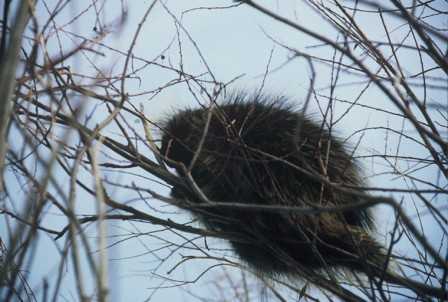
| Scientific Name: | Erethizon dorsatum (Linnaeus, 1758) | ||||||||||
|---|---|---|---|---|---|---|---|---|---|---|---|
| English Name: | North American Porcupine | ||||||||||
| Classification / Taxonomy | |||||||||||
| Scientific Name - Concept Reference: | Wilson, D. E., and D. M. Reeder (editors). 1993. Mammal species of the world: a taxonomic and geographic reference. Second edition. Smithsonian Institution Press, Washington, DC. xviii + 1206 pp. Available online at: http://www.nmnh.si.edu/msw/. | ||||||||||
| Classification Level: | Species | ||||||||||
| Species Group: | Vertebrate Animal | ||||||||||
| Species Code: | M-ERDO | ||||||||||
|
|||||||||||
| Conservation Status / Legal Designation | |||||||||||
| Global Status: | G5 (Apr 2016) | ||||||||||
| Provincial Status: | S4S5 (Mar 2023) | ||||||||||
| BC List: | Yellow | ||||||||||
| Provincial FRPA list: | |||||||||||
| Provincial Wildlife Act: | |||||||||||
| COSEWIC Status: | |||||||||||
| SARA Schedule: | |||||||||||
| General Status Canada: | 4 - Secure (2005) | ||||||||||
| Ecology & Life History | |||||||||||
| General Description: | |||||||||||
| Global Reproduction Comments: | Breeds September to November or December. Gestation lasts 17-18 weeks, usually 210 days, with births in spring. Lactation lasts about 4 months (spring-summer). Only one young is reared each year. Sexually mature in 15-16 months. In the Great Basin, Nevada, one of 13 juveniles, 100% of 2 and 3 year olds, and 90% of individuals 4 years old or older were pregnant (Sweitzer and Holcombe, 1993, J. Mamm. 74:769-776). | ||||||||||
| Global Ecology Comments: | Summer range may average up to 50-100 ha; winter range is less if there is much snow cover. Density may be 25-58/sq mile in good habitat (Baker 1983). | ||||||||||
| Migration Characteristics: (Global / Provincial) | |||||||||||
|
Nonmigrant: Local Migrant: Distant Migrant: Within Borders Migrant: |
Y / N / N / na / |
||||||||||
| Habitats: (Type / Subtype / Dependence) |
Alpine/Tundra / Alpine Grassland / Unknown
Forest / Conifer Forest - Dry / Unknown Forest / Conifer Forest - Mesic (average) / Unknown Forest / Conifer Forest - Moist/wet / Unknown Forest / Mixed Forest (deciduous/coniferous mix) / Facultative - frequent use Grassland/Shrub / Grassland / Facultative - occasional use Riparian / Gravel Bar / Facultative - occasional use Riparian / Riparian Forest / Facultative - occasional use Riparian / Riparian Herbaceous / Facultative - occasional use Riparian / Riparian Shrub / Facultative - occasional use Subterranean / Caves / Facultative - occasional use |
||||||||||
| Global Habitat Comments: | Prefers coniferous and mixed forests; also inhabits riparian zones, grasslands, shrublands, and deserts in some parts of the range. Winter den may be in a rock outcrop, live hollow tree, hollow log, or outbuilding. May shelter in dense conifers in winter. | ||||||||||
| Food Habits: |
Herbivore: Adult, Immature
|
||||||||||
| Global Food Habits Comments: | Feeds on inner bark of trees and on evergreen needles in winter; buds in spring; roots, leaves, berries, fruits, and seeds in summer; mast and fruits in fall. Preferred tree species are hemlock and sugar maple in Northeast, white pine in Great Lakes, and yellow pine. In the northern Great Basin, depleted energy reserves early in winter and were stressed nutritionally during late winter (Sweitzer and Berger, 1993, J. Mamm. 74:198-203). | ||||||||||
| Global Phenology: |
Circadian: Adult, Immature
Nocturnal: Adult, Immature |
||||||||||
| Global Phenology Comments: | Mainly nocturnal, frequently seen during the day. | ||||||||||
| Provincial Phenology: (1st half of month/ 2nd half of month) |
|||||||||||
| Colonial Breeder: | N | ||||||||||
| Length(cm)/width(cm)/Weight(g): | 93/ / 18000 | ||||||||||
| Elevation (m) (min / max): |
Global:
Provincial: |
||||||||||
| Distribution | |||||||||||
| Endemic: | N | ||||||||||
| Global Range Comment: | Range extends from central Alaska eastward to southern Hudson Bay and Labrador, and south in eastern North America to the northeastern United States (New England, Pennsylvania, West Virginia, New Jersey, and Maryland, and formerly to Virginia and North Carolina) and in central and western North America to central Texas, northern Coahuila, Chihuahua, Sonora, and southern California (Rose and Ilse, in Feldhamer et al. 2003). | ||||||||||
| Authors / Contributors | |||||||||||
| Global Information Author: | Hammerson, G. | ||||||||||
| Last Updated: | Jan 28, 1994 | ||||||||||
| Provincial Information Author: | |||||||||||
| Last Updated: | |||||||||||
| References and Related Literature | |||||||||||
Baker, R. H. 1983. Michigan mammals. Michigan State University Press. 642 pp. |
|||||||||||
Banfield, A. W. F. 1974. The mammals of Canada. University of Toronto Press, Toronto, Canada. 438 pp. |
|||||||||||
Caire, W., J. D. Tyler, B. P. Glass, and M. A. Mares. 1989. Mammals of Oklahoma. University of Oklahoma Press, Norman. Oklahoma. 567 pp. |
|||||||||||
Costello, D.F. 1966. The world of the porcupine. N.Y. 157 pp. |
|||||||||||
Craig, E. H., and B. L. Keller. 1986. Movements and home range of porcupine, Erethizon dorsatum, in Idaho shrub desert. Can. Field-Nat. 100:167-173. |
|||||||||||
Godin, A. J. 1977. Wild mammals of New England. Johns Hopkins University Press, Baltimore. 304 pp. |
|||||||||||
Hall, E. R. 1981a. The Mammals of North America, second edition. Vols. I & II. John Wiley & Sons, New York, New York. 1181 pp. |
|||||||||||
Hamilton, W. J., Jr., and J. O. Whitaker, Jr. 1979. Mammals of the eastern United States. Cornell Univ. Press, Ithaca, New York. 346 pp. |
|||||||||||
Hoffmeister, D. F. 1986. Mammals of Arizona. University of Arizona Press and Arizona Game and Fish Department. 602 pp. |
|||||||||||
Jones, J. K., Jr., R. S. Hoffman, D. W. Rice, C. Jones, R. J. Baker, and M. D. Engstrom. 1992a. Revised checklist of North American mammals north of Mexico, 1991. Occasional Papers, The Museum, Texas Tech University, 146:1-23. |
|||||||||||
Marshall, W. H., G. W. Gullion, and S. Schwab. 1962. Early summer activities of porcupines as determined by radio- positioning techniques. Journal of Wildlife Management 26:75-79. |
|||||||||||
Roze, U. 1989. The North American porcupine. Smithsonian Inst. Press, Washington, D.C. x + 261 pp. |
|||||||||||
Roze, V. 1987. Denning and winter range of the porcupine. Can. J. Zool. 65:981-986. |
|||||||||||
Shapiro, J. 1949. Ecological and life history notes on the porcupine in the Adirondacks. J. Mamm. 30:247-257. |
|||||||||||
Wilson, D. E., and D. M. Reeder (editors). 1993. Mammal species of the world: a taxonomic and geographic reference. Second edition. Smithsonian Institution Press, Washington, DC. xviii + 1206 pp. Available online at: http://www.nmnh.si.edu/msw/. |
|||||||||||
Woods, C. A. 1973. Erethizon dorsatum. American Socity of Mammalogists, Mammalian Species No. 29. 6pp. |
|||||||||||
Please visit the website Conservation Status Ranks for definitions of the data fields used in this summary report.
Suggested Citation:
B.C. Conservation Data Centre. 1994. Species Summary: Erethizon dorsatum. B.C. Minist. of Environment. Available: https://a100.gov.bc.ca/pub/eswp/ (accessed Apr 3, 2026).