
BC Conservation Data Centre: Species Summary
Euphagus cyanocephalus
Brewer's Blackbird
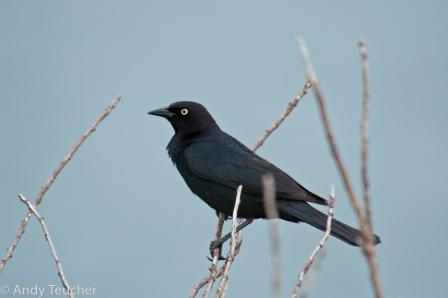
| Scientific Name: | Euphagus cyanocephalus (Wagler, 1829) | ||||||||||
|---|---|---|---|---|---|---|---|---|---|---|---|
| English Name: | Brewer's Blackbird | ||||||||||
| Classification / Taxonomy | |||||||||||
| Scientific Name - Concept Reference: | American Ornithologists' Union (AOU). 1998. Check-list of North American birds. Seventh edition. American Ornithologists' Union, Washington, D.C. [as modified by subsequent supplements and corrections published in The Auk]. Also available online: http://www.aou.org/. | ||||||||||
| Classification Level: | Species | ||||||||||
| Species Group: | Vertebrate Animal | ||||||||||
| Species Code: | B-BRBL | ||||||||||
|
|||||||||||
| Conservation Status / Legal Designation | |||||||||||
| Global Status: | G5 (Apr 2016) | ||||||||||
| Provincial Status: | S5 (Mar 2015) | ||||||||||
| BC List: | Yellow | ||||||||||
| Provincial FRPA list: | |||||||||||
| Provincial Wildlife Act: | |||||||||||
| COSEWIC Status: | |||||||||||
| SARA Schedule: | |||||||||||
| General Status Canada: | 4 - Secure (2005) | ||||||||||
| Migratory Bird Convention Act: | |||||||||||
| Ecology & Life History | |||||||||||
| General Description: | |||||||||||
| Global Reproduction Comments: | Clutch size is 3-7 (usually 5-6). Incubation lasts 12-14 days (Terres 1980). Young are tended by both adults, fly 13-14 days after hatching. Sometimes two broods are produced in one season. Males may be polygamous. Nests in loose colonies (3-20 pairs). | ||||||||||
| Global Ecology Comments: | Often seen in large flocks; may forage with other blackbirds. In California, individuals were found up to 10 kilometers from nest in breeding season (Williams 1952); in Washington, found up to 1.6 kilometers from nest, although most foraged much closer (Horn 1968). | ||||||||||
| Migration Characteristics: (Global / Provincial) | |||||||||||
|
Nonmigrant: Local Migrant: Distant Migrant: Within Borders Migrant: |
N / Y / Y / na / |
||||||||||
| Global Migration Comments: | Northern interior breeding populations are long-distance migrants; migrations mountainous west may be more localized. | ||||||||||
| Habitats: (Type / Subtype / Dependence) |
|||||||||||
| Global Habitat Comments: | Shrubby and bushy areas (especially near water), riparian woodland, aspen parklands, cultivated lands, marshes, and around human habitation; in migration and winter also in pastures and fields (AOU 1983). Nests in bushes and trees or on the ground, near open water, in marshes, fields, and urban areas. | ||||||||||
| Food Habits: |
Granivore: Adult, Immature
Invertivore: Adult, Immature |
||||||||||
| Global Food Habits Comments: | Feeds on insects, seeds, waste grain, and fruit. Walks on the ground while foraging, sometimes follows plows to eat uncovered insects. | ||||||||||
| Global Phenology: |
Diurnal: Adult, Immature
|
||||||||||
| Provincial Phenology: (1st half of month/ 2nd half of month) |
|||||||||||
| Colonial Breeder: | N | ||||||||||
| Length(cm)/width(cm)/Weight(g): | 23/ / 67 | ||||||||||
| Elevation (m) (min / max): |
Global:
Provincial: |
||||||||||
| Distribution | |||||||||||
| Endemic: | N | ||||||||||
| Global Range Comment: | BREEDS: central interior British Columbia to western Great Lakes area, south to northwestern Baja California, southern Nevada, western and northern Texas, northern Iowa. WINTERS: southern British Columbia and central Alberta, eastern Montana, Kansas, Arkansas, western South Carolina south to Oaxaca and central Veracruz, southern Texas, Gulf coast, southern Florida. Birdlife International (2014) estimates a distribtuion size of over 5 million square kilometers. | ||||||||||
| Authors / Contributors | |||||||||||
| Global Information Author: | HAMMERSON, G., MINOR REVISIONS BY S. CANNINGS | ||||||||||
| Last Updated: | Mar 22, 1994 | ||||||||||
| Provincial Information Author: | |||||||||||
| Last Updated: | |||||||||||
| References and Related Literature | |||||||||||
American Ornithologists' Union (AOU). 1983. Check-list of North American Birds, 6th edition. Allen Press, Inc., Lawrence, Kansas. 877 pp. |
|||||||||||
Campbell, R.W., N.K. Dawe, I.McT.-Cowan, J.M. Cooper, G. Kaiser, A.C. Stewart, and M.C.E. McNall. 2001. The Birds of British Columbia, Vol. 4, Passerines: Wood-Warblers through Old World Sparrows. UBC Press, in cooperation with Environ. Can., Can. Wildl. Serv., and B.C. Minist. Environ., Lands and Parks, Wildl. Branch and Resour. Inventory Branch, and Royal B.C. Mus. 744pp. |
|||||||||||
Godfrey, W.E. 1966. The birds of Canada. National Museums of Canada. Ottawa. 428 pp. |
|||||||||||
Harrison, C. 1978. A Field Guide to the Nests, Eggs and Nestlings of North American Birds. Collins, Cleveland, Ohio. |
|||||||||||
Horn, H. S. 1968. The adaptive significance of colonial nesting in the Brewer's Blackbird. Ecology 49:682-694. |
|||||||||||
National Geographic Society (NGS). 1983. Field guide to the birds of North America. National Geographic Society, Washington, DC. |
|||||||||||
Oberholser, H.C. 1974. The bird life of Texas. 2 vols. Univ. of Texas Press, Austin. |
|||||||||||
Orians, G. H. 1985. Blackbirds of the Americas. Univ. Washington Press, Seattle. |
|||||||||||
Terres, J. K. 1980. The Audubon Society encyclopedia of North American birds. Alfred A. Knopf, New York. |
|||||||||||
Williams, L. 1952b. Breeding behavior of the Brewer blackbird. Condor 54:3-47. |
|||||||||||
Please visit the website Conservation Status Ranks for definitions of the data fields used in this summary report.
Suggested Citation:
B.C. Conservation Data Centre. 1994. Species Summary: Euphagus cyanocephalus. B.C. Minist. of Environment. Available: https://a100.gov.bc.ca/pub/eswp/ (accessed Jun 10, 2026).