
BC Conservation Data Centre: Species Summary
Neovison vison
American Mink
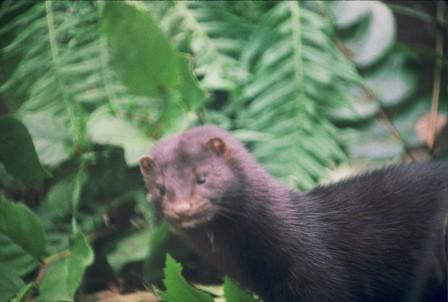
| Scientific Name: | Neovison vison (Schreber, 1777) | ||||||||||
|---|---|---|---|---|---|---|---|---|---|---|---|
| Scientific Name Synonyms: |
Mustela vison
|
||||||||||
| English Name: | American Mink | ||||||||||
| Classification / Taxonomy | |||||||||||
| Scientific Name - Concept Reference: | Wilson, D. E., and D. M. Reeder (editors). 2005. Mammal species of the world: a taxonomic and geographic reference. Third edition. The Johns Hopkins University Press, Baltimore. Two volumes. 2,142 pp. [As modified by ASM the Mammal Diversity Database (MDD) at https://www.mammaldiversity.org/index.html] | ||||||||||
| Classification Level: | Species | ||||||||||
| Taxonomy Comments: | Jan. 2007 - changed from Mustela vison as per NatureServe (DDW). | ||||||||||
| Species Group: | Vertebrate Animal | ||||||||||
| Species Code: | M-NEVI | ||||||||||
|
|||||||||||
| Conservation Status / Legal Designation | |||||||||||
| Global Status: | G5 (Apr 2016) | ||||||||||
| Provincial Status: | S5 (Mar 2024) | ||||||||||
| BC List: | Yellow | ||||||||||
| Provincial FRPA list: | |||||||||||
| Provincial Wildlife Act: | |||||||||||
| COSEWIC Status: | |||||||||||
| SARA Schedule: | |||||||||||
| General Status Canada: | 4 - Secure (2005) | ||||||||||
| Ecology & Life History | |||||||||||
| General Description: | A medium-sized mammal with an elongate body, a long tail, small rounded ears, and relatively short legs; pelage is soft, luxurious, and generally rich brown to almost black dorsally; the underparts are paler, sometimes with a whitish chin patch and whitish spotting elsewhere; 5 digits on each foot; head-body 330-430 mm in males, 300-400 mm in females; tail 158-230 mm in males, 128-200 mm in females; mass 681-2310 g in males, 790-1089 g in females; basilar length of skull 58-69 mm (Nowak 1991, Hall 1981, Burt and Grossenheider 1964). | ||||||||||
| Global Reproduction Comments: | Breeds in northern states late February to early May, peak in March. Gestation lasts 40-75 (average 51) days; implantation is delayed. Litter size is 2-10 (average 3-4). Young begin to venture from nest after about 7 weeks, weaned at 8-9 weeks. Male sometimes may help care for young. Sexually mature in 10 months. | ||||||||||
| Global Ecology Comments: |
Solitary except during mating period and when females have young. In good habitat, density may be 9-22 per sq mile (Banfield 1974). |
||||||||||
| Migration Characteristics: (Global / Provincial) | |||||||||||
|
Nonmigrant: Local Migrant: Distant Migrant: Within Borders Migrant: |
Y / N / N / na / |
||||||||||
| Global Migration Comments: | Male home range considerably larger than that of female; average for female 20-50 acres (not more than 20 acres according to Layne 1978), for male 1900 acres plus (Banfield 1974, Schwartz and Schwartz 1981), up to 8 km (5 mi.) in diameter (Caire et al. 1989). In Tennessee, fall-early winter home range of three males (2 adults, 1 juvenile) was 5.6-11.1 km of stream; overnight movements were as large as 4.3 km (Stevens et al. 1997). In England, partial-year home range was 4.5-8.6 km (mean 6.0 km) of water course in males and 0.8-4.3 km (mean 2.7 km) in females (Yamaguchi and Macdonald 2003). | ||||||||||
| Habitats: (Type / Subtype / Dependence) |
Forest / Conifer Forest - Moist/wet / Facultative - occasional use
Forest / Deciduous/Broadleaf Forest / Facultative - occasional use Forest / Mixed Forest (deciduous/coniferous mix) / Facultative - occasional use Grassland/Shrub / Shrub - Logged / Facultative - occasional use Grassland/Shrub / Shrub - Natural / Facultative - occasional use Lakes / Lake / Facultative - frequent use Other Unique Habitats / Beach / Facultative - frequent use Other Unique Habitats / Estuary / Facultative - frequent use Riparian / Riparian Forest / Facultative - frequent use Stream/River / Stream/River / Facultative - frequent use Wetland / Bog / Facultative - frequent use Wetland / Fen / Facultative - frequent use Wetland / Marsh / Facultative - frequent use Wetland / Swamp / Facultative - frequent use |
||||||||||
| Global Habitat Comments: | Favors forested, permanent or semipermanent wetlands with abundant cover, marshes, and riparian zones Dens in muskrat burrow, abandoned beaver den, hollow log, hole under tree roots, or in burrow dug by mink in streambank. | ||||||||||
| Food Habits: |
Carnivore: Adult, Immature
Invertivore: Adult, Immature Piscivore: Adult, Immature |
||||||||||
| Global Food Habits Comments: | Small mammals, other vertebrates (e.g., waterfowl), crayfish, and small vertebrates associated with aquatic/riparian ecosystems. Muskrats (ONDATRA ZIBETHICUS) particularly are favored in some areas, but diet reflects availability. | ||||||||||
| Global Phenology: |
Crepuscular: Adult, Immature
Nocturnal: Adult, Immature |
||||||||||
| Global Phenology Comments: | Mainly nocturnal and crepuscular. May reduce activity in severe winter weather. | ||||||||||
| Provincial Phenology: (1st half of month/ 2nd half of month) |
|||||||||||
| Colonial Breeder: | N | ||||||||||
| Length(cm)/width(cm)/Weight(g): | 72/ / 1600 | ||||||||||
| Elevation (m) (min / max): |
Global:
Provincial: |
||||||||||
| Distribution | |||||||||||
| Endemic: | N | ||||||||||
| Global Range Comment: | Throughout most of North America north of Mexico except for southwestern U.S. Introduced in Iceland, north-central Europe, British Isles, Norway, Belarussia, Baltic States, Spain, and Siberia (Wozencraft, in Wilson and Reeder 1993). | ||||||||||
| Authors / Contributors | |||||||||||
| Global Information Author: | Hammerson, G. | ||||||||||
| Last Updated: | Jan 03, 2004 | ||||||||||
| Provincial Information Author: | |||||||||||
| Last Updated: | |||||||||||
| References and Related Literature | |||||||||||
Baker, R. H. 1983. Michigan mammals. Michigan State University Press. 642 pp. |
|||||||||||
Banfield, A. W. F. 1974. The mammals of Canada. University of Toronto Press, Toronto, Canada. 438 pp. |
|||||||||||
Caire, W., J. D. Tyler, B. P. Glass, and M. A. Mares. 1989. Mammals of Oklahoma. University of Oklahoma Press, Norman. Oklahoma. 567 pp. |
|||||||||||
Enders, R.K. 1952. Reproduction in the mink (Mustela vision) -- Proc. American Philos. Soc., 96:691-755. |
|||||||||||
Godin, A. J. 1977. Wild mammals of New England. Johns Hopkins University Press, Baltimore. 304 pp. |
|||||||||||
Hall, E. R. 1981a. The Mammals of North America, second edition. Vols. I & II. John Wiley & Sons, New York, New York. 1181 pp. |
|||||||||||
Hall, E.R. 1951. American Weasels. Univ. Kansas Publication, Museum Natural History, 4:1-466. |
|||||||||||
Hamilton, W. J., Jr., and J. O. Whitaker, Jr. 1979. Mammals of the eastern United States. Cornell Univ. Press, Ithaca, New York. 346 pp. |
|||||||||||
Hatler, D.F., Nagorsen, D.W. and Beal, A.M., 2008. Carnivores of British Columbia (Vol. 5). Victoria, British Columbia, Canada: Royal BC Museum. |
|||||||||||
Humphrey, S. R., and H. W. Setzer. 1989. Geographic variation and taxonomic revision of mink (Mustela vison) in Florida. J. Mamm. 70(2):241-252. |
|||||||||||
Jones, J. K., Jr., R. S. Hoffman, D. W. Rice, C. Jones, R. J. Baker, and M. D. Engstrom. 1992a. Revised checklist of North American mammals north of Mexico, 1991. Occasional Papers, The Museum, Texas Tech University, 146:1-23. |
|||||||||||
Layne, J. N., editor. 1978. Rare and endangered biota of Florida. Vol. 1. Mammals. State of Florida Game and Freshwater Fish Commission. xx + 52 pp. |
|||||||||||
Nowak, R. M. 1991. Walker's mammals of the world. Fifth edition. Vols. I and II. Johns Hopkins Univ. Press, Baltimore. 1629 pp. |
|||||||||||
Schwartz, C. W., and E. R. Schwartz. 1981. The wild mammals of Missouri. University of Missouri Press, Columbia. 356 pp. |
|||||||||||
Stevens, R. T., T. L. Ashwood, and J. M. Sleeman. 1997. Fall-early winter home ranges, movements, and den use of male mink, MUSTELA VISON in eastern Tennessee. Canadian Field-Naturalist 111:312-314. |
|||||||||||
Whitaker, J. O., Jr. 1980. The Audubon Society field guide to North American mammals. Alfred A. Knopf, New York. 745 pp. |
|||||||||||
Wilson, D. E., and D. M. Reeder (editors). 1993. Mammal species of the world: a taxonomic and geographic reference. Second edition. Smithsonian Institution Press, Washington, DC. xviii + 1206 pp. Available online at: http://www.nmnh.si.edu/msw/. |
|||||||||||
Please visit the website Conservation Status Ranks for definitions of the data fields used in this summary report.
Suggested Citation:
B.C. Conservation Data Centre. 2004. Species Summary: Neovison vison. B.C. Minist. of Environment. Available: https://a100.gov.bc.ca/pub/eswp/ (accessed Sep 20, 2026).