
BC Conservation Data Centre: Species Summary
Callospermophilus lateralis
Golden-mantled Ground Squirrel
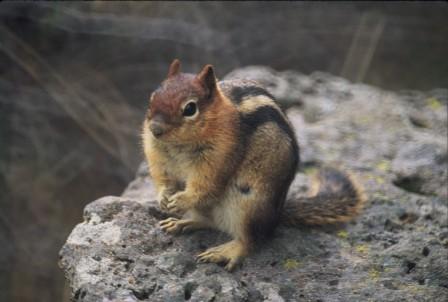
| Scientific Name: | Callospermophilus lateralis (Say, 1823) | ||||||||||
|---|---|---|---|---|---|---|---|---|---|---|---|
| Scientific Name Synonyms: |
Spermophilus lateralis
|
||||||||||
| English Name: | Golden-mantled Ground Squirrel | ||||||||||
| Classification / Taxonomy | |||||||||||
| Scientific Name - Concept Reference: | Wilson, D. E., and D. M. Reeder (editors). 1993. Mammal species of the world: a taxonomic and geographic reference. Second edition. Smithsonian Institution Press, Washington, DC. xviii + 1206 pp. Available online at: http://www.nmnh.si.edu/msw/. | ||||||||||
| Classification Level: | Species | ||||||||||
| Taxonomy Comments: | March 2012 - name changed from Spermophilus lateralis to Callospermophilus lateralis to align with NatureServe (DDW). | ||||||||||
| Species Group: | Vertebrate Animal | ||||||||||
| Species Code: | M-CLLA | ||||||||||
|
|||||||||||
| Conservation Status / Legal Designation | |||||||||||
| Global Status: | G5 (Apr 2016) | ||||||||||
| Provincial Status: | S5 (Mar 2024) | ||||||||||
| BC List: | Yellow | ||||||||||
| Provincial FRPA list: | |||||||||||
| Provincial Wildlife Act: | |||||||||||
| COSEWIC Status: | |||||||||||
| SARA Schedule: | |||||||||||
| General Status Canada: | 4 - Secure (2005) | ||||||||||
| Ecology & Life History | |||||||||||
| General Description: | |||||||||||
| Global Reproduction Comments: | Breeding occurs in the spring soon after females emerge from hibernation. Females are monoestrous. Gestation lasts 26-33 days. Litter size is 2-8, usually 4-6. Young emerge from burrow typically in July (to early August at highest elevations). Weaning occurs at minimum age of 4 weeks. Males do not take part in family life. A few may live up to 7 years. | ||||||||||
| Global Ecology Comments: | Populations usually are distributed evenly over good habitat. Predators include snakes, foxes, weasels, and bears. This species may be an intermediate host for the Rocky Mountain spotted fever tick, DERMACENTOR ANDERSONI. | ||||||||||
| Migration Characteristics: (Global / Provincial) | |||||||||||
|
Nonmigrant: Local Migrant: Distant Migrant: Within Borders Migrant: |
Y / N / N / na / |
||||||||||
| Habitats: (Type / Subtype / Dependence) |
|||||||||||
| Global Habitat Comments: | Inhabits mountain slopes and foothills, alpine tundra, chaparral, open areas in pine, spruce, and fir forests, rocky outcroppings and slides, margins of mountain meadows, and rocky sagebrush country; campgrounds. Often in areas with abundant stumps, rocks, of fallen logs. When inactive or tending young, occupies burrows under rocks, stumps, logs, trees, bushes, or cabins, in rock crevices, or in banks or along washes. | ||||||||||
| Food Habits: |
Frugivore: Adult, Immature
Granivore: Adult, Immature Herbivore: Adult, Immature |
||||||||||
| Global Food Habits Comments: | Omnivorous. Feeds on seeds, fungus, leaves, flowers, fruits and roots. Also feeds on arthropods and meat, including carrion. In one study underground fungus comprised 65% of summer food and 90% of fall food. May store food in burrow in summer. | ||||||||||
| Global Phenology: |
Diurnal: Adult, Immature
Hibernates/aestivates: Adult, Immature |
||||||||||
| Global Phenology Comments: | Active mainly March-November at low elevations; season is shorter in high mountains and in areas with abundant snowfall. | ||||||||||
| Provincial Phenology: (1st half of month/ 2nd half of month) |
|||||||||||
| Colonial Breeder: | N | ||||||||||
| Length(cm)/width(cm)/Weight(g): | 31/ / 276 | ||||||||||
| Elevation (m) (min / max): |
Global:
Provincial: |
||||||||||
| Distribution | |||||||||||
| Endemic: | N | ||||||||||
| Global Range Comment: | Western North America. Eastern British Columbia and western Alberta south through the western U.S. to California, Arizona, and New Mexico. Elevations of 1220-3965 m (Bartels and Thompson 1993). | ||||||||||
| Authors / Contributors | |||||||||||
| Global Information Author: | Hammerson, G. | ||||||||||
| Last Updated: | Dec 14, 1993 | ||||||||||
| Provincial Information Author: | |||||||||||
| Last Updated: | |||||||||||
| References and Related Literature | |||||||||||
Banfield, A. W. F. 1974. The mammals of Canada. University of Toronto Press, Toronto, Canada. 438 pp. |
|||||||||||
Bartels, M. A., and D. P. Thompson. 1993. Spermophilus lateralis. Am. Soc. Mamm., Mammalian Species No. 440:1-8. |
|||||||||||
Hall, E. R. 1946. Mammals of Nevada. The University of California Press, Berkeley, California. |
|||||||||||
Larrison, E.J. and D.R. Johnson. 1981. Mammals of Idaho. The University of Idaho Press, Moscow. |
|||||||||||
Maser, C., and Z. Maser. 1988. Interactions among squirrels, mycorrhizal fungi, and coniferous forests in Oregon. Great Basin Nat. 48:358-369. |
|||||||||||
Murie, J. O., and G. R. Michener, editors. 1984. The biology of ground-dwelling squirrels: annual cycles, behavioral ecology and sociality. Univ. Nebraska Press, Lincoln. xvi + 459 pp. |
|||||||||||
Please visit the website Conservation Status Ranks for definitions of the data fields used in this summary report.
Suggested Citation:
B.C. Conservation Data Centre. 1993. Species Summary: Callospermophilus lateralis. B.C. Minist. of Environment. Available: https://a100.gov.bc.ca/pub/eswp/ (accessed Jun 12, 2026).