
BC Conservation Data Centre: Species Summary
Tyrannus tyrannus
Eastern Kingbird
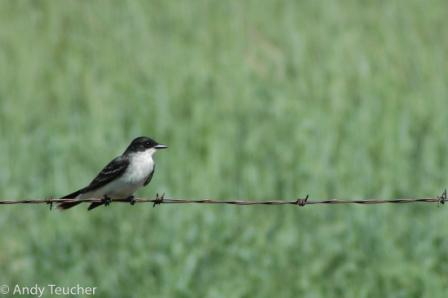
| Scientific Name: | Tyrannus tyrannus (Linnaeus, 1758) | ||||||||||
|---|---|---|---|---|---|---|---|---|---|---|---|
| English Name: | Eastern Kingbird | ||||||||||
| Classification / Taxonomy | |||||||||||
| Scientific Name - Concept Reference: | American Ornithologists' Union (AOU). 1998. Check-list of North American birds. Seventh edition. American Ornithologists' Union, Washington, D.C. [as modified by subsequent supplements and corrections published in The Auk]. Also available online: http://www.aou.org/. | ||||||||||
| Classification Level: | Species | ||||||||||
| Species Group: | Vertebrate Animal | ||||||||||
| Species Code: | B-EAKI | ||||||||||
|
|||||||||||
| Conservation Status / Legal Designation | |||||||||||
| Global Status: | G5 (Apr 2016) | ||||||||||
| Provincial Status: | S4B (Mar 2022) | ||||||||||
| BC List: | Yellow | ||||||||||
| Provincial FRPA list: | |||||||||||
| Provincial Wildlife Act: | |||||||||||
| COSEWIC Status: | |||||||||||
| SARA Schedule: | |||||||||||
| General Status Canada: | 4 - Secure (2005) | ||||||||||
| Migratory Bird Convention Act: | Y | ||||||||||
| Ecology & Life History | |||||||||||
| General Description: | |||||||||||
| Global Reproduction Comments: | Clutch size 3-5 eggs. Incubation 12-13 days or perhaps longer, by female. Young tended by both parents, leave nest at about 13-14 days; parents continue to feed young for up to 5 weeks more. | ||||||||||
| Global Ecology Comments: | Mean size of 4 territories in South Carolina during nestling period was 8.4 hectares (Odum and Keunzler 1955, cited in Murphy 1996). However, territories tend to be larger earlier in the nesting cycle (Odum and Keunzler 1955). | ||||||||||
| Migration Characteristics: (Global / Provincial) | |||||||||||
|
Nonmigrant: Local Migrant: Distant Migrant: Within Borders Migrant: |
N / N / Y / na / |
||||||||||
| Global Migration Comments: | Arrives in nesting areas April-May (Terres 1980). Migrates through Costa Rica from late August or early September to late October and late March to mid-May (Stiles and Skutch 1989). Present in Colombia mainly early September-late October, and early March-early May; migrates in groups, sometimes many hundreds, infrequently alone (Hilty and Brown 1986, Ridgely and Gwynne 1989). Arrives in southeastern Peru in late September (Keast and Morton 1980). | ||||||||||
| Habitats: (Type / Subtype / Dependence) |
Agriculture / Hedgerow / Facultative - occasional use
Anthropogenic / Urban/Suburban / Facultative - frequent use Forest / Conifer Forest - Dry / Facultative - occasional use Forest / Deciduous/Broadleaf Forest / Facultative - frequent use Forest / Mixed Forest (deciduous/coniferous mix) / Facultative - frequent use Grassland/Shrub / Antelope-brush Steppe / Facultative - occasional use Grassland/Shrub / Grassland / Facultative - occasional use Grassland/Shrub / Meadow / Facultative - occasional use Grassland/Shrub / Sagebrush Steppe / Facultative - occasional use Lakes / Lake / Facultative - frequent use Lakes / Pond/Open Water / Facultative - frequent use Riparian / Gravel Bar / Facultative - frequent use Riparian / Riparian Forest / Facultative - frequent use Riparian / Riparian Herbaceous / Facultative - frequent use Riparian / Riparian Shrub / Facultative - frequent use Wetland / Marsh / Facultative - frequent use Wetland / Swamp / Facultative - frequent use |
||||||||||
| Global Habitat Comments: | Forest edge, open situations with scattered trees and shrubs, cultivated lands with bushes and fencerows, and parks; in winter more closely associated with forest clearings and borders (AOU 1983). Migrants in Costa Rica roost in isolated clumps of trees or amid tall coarse grass (Stiles and Skutch 1989). BREEDING: Nests usually on horizontal limb of isolated tree or orchard tree, in low shrub at water's edge, or on stump or snag in water; average height of 3-6 m (Terres 1980). | ||||||||||
| Food Habits: |
Frugivore: Adult, Immature
Invertivore: Adult, Immature |
||||||||||
| Global Food Habits Comments: | Eats mainly insects obtained by flycatching from perch; also eats seeds and small fruits, and may pick food from ground or water surface (Terres 1980). Migrants in Costa Rica hawk insects and eat berries or arillate seeds (Stiles and Skutch 1989). Migrants in Panama often feed in flocks on fruit in forest canopy (Ridgely and Gwynne 1989). | ||||||||||
| Global Phenology: |
Diurnal: Adult, Immature
|
||||||||||
| Provincial Phenology: (1st half of month/ 2nd half of month) |
|||||||||||
| Colonial Breeder: | N | ||||||||||
| Length(cm)/width(cm)/Weight(g): | 22/ / 40 | ||||||||||
| Elevation (m) (min / max): |
Global:
Provincial: |
||||||||||
| Distribution | |||||||||||
| Endemic: | N | ||||||||||
| Global Range Comment: | BREEDING: southwestern and north-central British Columbia and southern Mackenzie to New Brunswick, south to northeastern California, Utah, New Mexico, Gulf Coast, and Florida. NON-BREEDING: western Amazonia south to southern Bolivia and central Argentina; wanders east to Venezuela, Guyana, and Mato Grosso, Brazil (Hilty and Brown 1986). | ||||||||||
| Authors / Contributors | |||||||||||
| Global Information Author: | HAMMERSON, G. | ||||||||||
| Last Updated: | Jan 24, 1994 | ||||||||||
| Provincial Information Author: | |||||||||||
| Last Updated: | |||||||||||
| References and Related Literature | |||||||||||
American Ornithologists' Union (AOU). 1983. Check-list of North American Birds, 6th edition. Allen Press, Inc., Lawrence, Kansas. 877 pp. |
|||||||||||
Bent, A.C. 1942. Life histories of North American flycatchers, larks, swallows, and their allies. U.S. National Museum Bulletin 179. Washington, DC. |
|||||||||||
Campbell, R.W., N.K. Dawe, I. McTaggart-Cowan, J.M. Cooper, G.W. Kaiser, M.C.E. McNall and G.E.J. Smith 1997. The Birds of British Columbia, Vol. 3, Passerines: Flycatchers through Vireos. UBC Press in cooperation with Environ. Can., Can. Wildl. Serv. and B.C. Minist. Environ., Lands and Parks, Wildl. Branch. 700pp. |
|||||||||||
Harrison, C. 1978. A Field Guide to the Nests, Eggs and Nestlings of North American Birds. Collins, Cleveland, Ohio. |
|||||||||||
Harrison, H. H. 1979. A field guide to western birds' nests. Houghton Mifflin Company, Boston. 279 pp. |
|||||||||||
Hilty, S.L. and W. L. Brown. 1986. A Guide to the Birds of Colombia. Princeton University Press, Princeton, USA. 836 pp. |
|||||||||||
Keast, A., and E.S. Morton. 1980. Migrant birds in the neotropics: ecology, distribution, and conservation. Smithsonian Institution Press, Washington, DC. |
|||||||||||
Murphy, M. T. 1996. Eastern Kingbird (TYRANNUS TYRANNUS). No. 253 IN A. Poole and F. Gill, editors, The birds of North America. The Academy of Natural Sciences, Philadelphia, PA, and The Amerian Ornithologists' Union, Washington, DC. 24pp. |
|||||||||||
Odum, E. P., and E. J. Kuenzler. 1955. Measurement of territory and home range size in birds. Auk 72:128-137. |
|||||||||||
Ridgely, R. S., and J. A. Gwynne, Jr. 1989. A guide to the birds of Panama with Costa Rica, Nicaragua, and Honduras. Second edition. Princeton Univ. Press, Princeton, New Jersey. 534 pp. |
|||||||||||
Stiles, F. G. and A. F. Skutch. 1989. A guide to the birds of Costa Rica. Cornell University Press, Ithaca, New York, USA. 511 pp. |
|||||||||||
Terres, J. K. 1980. The Audubon Society encyclopedia of North American birds. Alfred A. Knopf, New York. |
|||||||||||
Van Wynsberghe, N. R., J. D. Rising, and D. I. MacKenzie. 1992. Geographic variation in size of the eastern kingbird. Wilson Bull. 104:612-629. |
|||||||||||
Please visit the website Conservation Status Ranks for definitions of the data fields used in this summary report.
Suggested Citation:
B.C. Conservation Data Centre. 1994. Species Summary: Tyrannus tyrannus. B.C. Minist. of Environment. Available: https://a100.gov.bc.ca/pub/eswp/ (accessed Nov 9, 2026).