
BC Conservation Data Centre: Species Summary
Eschrichtius robustus
Grey Whale
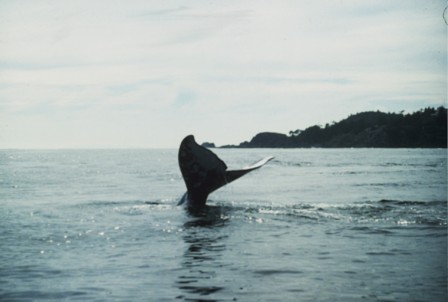
| Scientific Name: | Eschrichtius robustus (Lilljeborg, 1861) | ||||||||||
|---|---|---|---|---|---|---|---|---|---|---|---|
| English Name: | Grey Whale | ||||||||||
| Classification / Taxonomy | |||||||||||
| Scientific Name - Concept Reference: | Wilson, D. E., and D. M. Reeder (editors). 1993. Mammal species of the world: a taxonomic and geographic reference. Second edition. Smithsonian Institution Press, Washington, DC. xviii + 1206 pp. Available online at: http://www.nmnh.si.edu/msw/. | ||||||||||
| Classification Level: | Species | ||||||||||
| Species Group: | Vertebrate Animal | ||||||||||
| Species Code: | M-ESRO | ||||||||||
|
|||||||||||
| Conservation Status / Legal Designation | |||||||||||
| Global Status: | G4 (Apr 2016) | ||||||||||
| Provincial Status: | S3S4 (Jan 2023) | ||||||||||
| BC List: | No Status | ||||||||||
| Provincial FRPA list: | |||||||||||
| Provincial Wildlife Act: | |||||||||||
| COSEWIC Status: | Special Concern / Endangered / Not at Risk (May 2004) | ||||||||||
| COSEWIC Comments: | NE Pacific Population - SC; Pacific Coast Feeding Group population and Western Pacific population - E; Northern Pacific Migratory population - NAR | ||||||||||
| SARA Schedule: | 1 - Special Concern (Jul 2005) | ||||||||||
| SARA Comments: | Eastern North Pacific population | ||||||||||
| General Status Canada: | |||||||||||
| Ecology & Life History | |||||||||||
| General Description: | This is a large, gray mottled baleen whale lacking a dorsal fin. The head is narrow with an arched profile. Baleen is yellowish white and 2-10 inches (5-25 cm) long. Two nostrils are present. A middorsal hump is followed by a series of about 6-12 bumps. Flippers are short and broad. Body is varyingly colored by patches of barnacles and cyamid crustaceans. Calves are more uniformly dark than are adults. Maximum length is around 50 feet (15 meters). Sources: Leatherwood and Reeves (1983), Nowak (1991). | ||||||||||
| Global Reproduction Comments: | Females are impregnated during the southward migration or close to calving grounds. Gestation lasts about 13.5 months. A single calf is born late December-early February. Weaning occurs within 9 months. The calving interval is usually 2 years. Individuals become sexually mature in 5-11 years. | ||||||||||
| Global Ecology Comments: | In the northern Bering Sea, various seabirds (northern fulmar, red phalarope, black-legged kittiwake, and thick-billed murre) commonly forage on prey in the mud plumes stirred up by feeding gray whales. | ||||||||||
| Migration Characteristics: (Global / Provincial) | |||||||||||
|
Nonmigrant: Local Migrant: Distant Migrant: Within Borders Migrant: |
N / N / Y / na / |
||||||||||
| Global Migration Comments: | The eastern North Pacific stock migrates northward to summer range in February-May, led by newly pregnant females. The southward migration (November-January), led by pregnant females, passes through Unimak Pass, Alaska, and for most individuals ends in the Mexican winter range. The southward migration is more concentrated and closer to shore than is the northward migration. Roundtrip migration is up to about 18,000 kilometers. Small numbers spend the summer along the west coast of North America, from California north (Rice, in Wilson and Ruff 1999). The western Pacific stock migrates south from western and northern Sea of Okhotsk to the southern coast of China (Rice, in Wilson and Ruff 1999). |
||||||||||
| Habitats: (Type / Subtype / Dependence) |
Ocean / Pelagic / Obligate
Ocean / Sheltered Waters - Marine / Unknown Ocean / Subtidal Marine / Unknown |
||||||||||
| Global Habitat Comments: | Gray whales are seen mostly in coastal and shallow shelf waters. Young are born in lagoons and bays. | ||||||||||
| Provincial Habitat Comments: | Marine | ||||||||||
| Food Habits: |
Invertivore: Adult, Immature
|
||||||||||
| Global Food Habits Comments: | In the southern Chukchi Sea and northern Bering Sea, gray whales eat mainly tube-dwelling gammaridean amphipods; also various other small bottom invertebrates in small quantity. In the southern Bering Sea along the eastern Alaska Peninsula and adjacent Alaskan mainland, shrimp and mysids are the major prey. In Puget Sound, the whales feed on epibenthic ghost shrimp in littoral sand flats (Weitkamp et al. 1992). Elsewhere feeding is less common and prey may include swarms of amphipods, cumaceans, mysids, and infaunal polychaetes. Gray whales employ a feeding technique not used by other large whales. While swimming forward and rolling to one side they run the head along the bottom and filter small invertebrates from the mud-water interface. They also may ingest invertebrates associated with masses of algae that are scraped through the mouth. |
||||||||||
| Global Phenology: | |||||||||||
| Provincial Phenology: (1st half of month/ 2nd half of month) |
|||||||||||
| Colonial Breeder: | Y | ||||||||||
| Length(cm)/width(cm)/Weight(g): | 1410/ / 33000000 | ||||||||||
| Elevation (m) (min / max): |
Global:
Provincial: |
||||||||||
| Distribution | |||||||||||
| Endemic: | N | ||||||||||
| Global Range Comment: | Range includes coastal waters of the North Pacific. Most gray whales are in the Bering and Chukchi seas in summer (some occur then off northern Alaska, the Siberian coast, and southward along the coast to British Columbia and northern California). In winter, they occur in coastal waters off Baja California, Sonora, and Sinaloa. Primary birthing areas are Laguna Ojo de Liebre (Scammon's Lagoon), Laguna Guerrero Negro, Laguna San Ignacio, and Estero Soledad, Mexico (IUCN 1991). This species has been extirpated in the Atlantic (last seen about 1750; Rice 1998, Nowak 1991). A small population exists in the western Pacific (Okhotsk Sea in summer to South Korean coast in winter) (Weller et al. 1999). | ||||||||||
| Authors / Contributors | |||||||||||
| Global Information Author: | Hammerson, G. | ||||||||||
| Last Updated: | Feb 02, 2010 | ||||||||||
| Provincial Information Author: | |||||||||||
| Last Updated: | |||||||||||
| References and Related Literature | |||||||||||
B.C. Ministry of Environment. Recovery Planning in BC. B.C. Minist. Environ. Victoria, BC. |
|||||||||||
COSEWIC. 2004c. COSEWIC assessment and update status report on the grey whale (Eastern North Pacific population) Eschrichtius robustus in Canada. Committee on the Status of Endangered Wildlife in Canada. Ottawa. vii + 31 pp. |
|||||||||||
Ellis, R. 1985. The Book of Whales. Alfred A. Knopf, New York, New York. |
|||||||||||
Evans, P. G. H. 1992. The natural history of whales & dolphins. Facts on File Publications, New York. xvi + 343 pp. |
|||||||||||
IUCN (World Conservation Union). 1991. Dolphins, Porpoises and Whales of the World: the IUCN Red Data Book. M. Klinowska (compiler). IUCN, Gland, Switzerland, and Cambridge, United Kingdom. viii + 429 pp. |
|||||||||||
Jones, J. K., Jr., R. S. Hoffman, D. W. Rice, C. Jones, R. J. Baker, and M. D. Engstrom. 1992a. Revised checklist of North American mammals north of Mexico, 1991. Occasional Papers, The Museum, Texas Tech University, 146:1-23. |
|||||||||||
Jones, M. L., S. L. Swartz, and S. Leatherwood, eds. 1984. The gray whale Eschrichtius robustus. Academic Press, San Diego, California. |
|||||||||||
Leatherwood, S., and R. R. Reeves. 1983. The Sierra Club handbook of whales and dolphins. Sierra Club Books, San Francisco. 302 pp. |
|||||||||||
Matthews, J.R. and C.J. Moseley (eds.). 1990. The Official World Wildlife Fund Guide to Endangered Species of North America. Volume 1. Plants, Mammals. xxiii + pp 1-560 + 33 pp. appendix + 6 pp. glossary + 16 pp. index. Volume 2. Birds, Reptiles, Amphibians, Fishes, Mussels, Crustaceans, Snails, Insects, and Arachnids. xiii + pp. 561-1180. Beacham Publications, Inc., Washington, D.C. |
|||||||||||
Nowak, R. M. 1991. Walker's mammals of the world. Fifth edition. Vols. I and II. Johns Hopkins Univ. Press, Baltimore. 1629 pp. |
|||||||||||
Reeves, R. R., and E. Mitchell. 1988. Current status of the gray whale. Eschrichtius robustus. Canadian Field-Naturalist 102:369-390. |
|||||||||||
Rice, D. W., and A. A. Wolman. 1971. The life history and ecology of the gray whale (Eschrichtius robustus). Am. Soc. Mamm. Specical Publication (3):1-142. 142 pp. |
|||||||||||
Ridgway, S. H., and R. J. Harrison. 1985. Handbook of marine mammals. Vol. 3. The sirenians and baleen whales. Academic Press, New York. 362 pp. |
|||||||||||
Weitkamp, L. A., et al. 1992. Gray whale foraging on ghost shrimp (Callianassa californiensis) in littoral sand flats of Puget Sound, U.S.A. Can. J. Zool. 70:2275-2280. |
|||||||||||
Wilson, D. E., and D. M. Reeder (editors). 1993. Mammal species of the world: a taxonomic and geographic reference. Second edition. Smithsonian Institution Press, Washington, DC. xviii + 1206 pp. Available online at: http://www.nmnh.si.edu/msw/. |
|||||||||||
Please visit the website Conservation Status Ranks for definitions of the data fields used in this summary report.
Suggested Citation:
B.C. Conservation Data Centre. 2010. Species Summary: Eschrichtius robustus. B.C. Minist. of Environment. Available: https://a100.gov.bc.ca/pub/eswp/ (accessed Jun 7, 2026).