
BC Conservation Data Centre: Species Summary
Mephitis mephitis
Striped Skunk
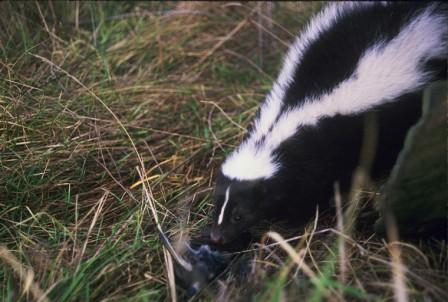
| Scientific Name: | Mephitis mephitis (Schreber, 1776) | ||||||||||
|---|---|---|---|---|---|---|---|---|---|---|---|
| English Name: | Striped Skunk | ||||||||||
| Classification / Taxonomy | |||||||||||
| Scientific Name - Concept Reference: | Wilson, D. E., and D. M. Reeder (editors). 1993. Mammal species of the world: a taxonomic and geographic reference. Second edition. Smithsonian Institution Press, Washington, DC. xviii + 1206 pp. Available online at: http://www.nmnh.si.edu/msw/. | ||||||||||
| Classification Level: | Species | ||||||||||
| Species Group: | Vertebrate Animal | ||||||||||
| Species Code: | M-MEME | ||||||||||
|
|||||||||||
| Conservation Status / Legal Designation | |||||||||||
| Global Status: | G5 (Apr 2016) | ||||||||||
| Provincial Status: | S5 (Mar 2024) | ||||||||||
| BC List: | Yellow | ||||||||||
| Provincial FRPA list: | |||||||||||
| Provincial Wildlife Act: | |||||||||||
| COSEWIC Status: | |||||||||||
| SARA Schedule: | |||||||||||
| General Status Canada: | 4 - Secure (2005) | ||||||||||
| Ecology & Life History | |||||||||||
| General Description: | |||||||||||
| Global Reproduction Comments: | Breeds February-late March, peak in mid-February. Reported pregnancy rate is 78-96%. Gestation lasts 62-68 days. Litter of 2-10 (average 6-8) is born from late April to early June; one litter per year. Young are weaned and begin to follow female at 6-7 weeks; some on their own by fall. Sexually mature in first spring. | ||||||||||
| Global Ecology Comments: | Home range up to several hundred ha; males tend to wander more than do females. Population density may fluctuate greatly. Several individuals, mainly females, may share winter den | ||||||||||
| Migration Characteristics: (Global / Provincial) | |||||||||||
|
Nonmigrant: Local Migrant: Distant Migrant: Within Borders Migrant: |
Y / Y / N / na / |
||||||||||
| Habitats: (Type / Subtype / Dependence) |
Agriculture / Cultivated Field / Facultative - occasional use
Agriculture / Hedgerow / Facultative - occasional use Agriculture / Pasture/Old Field / Facultative - occasional use Anthropogenic / Urban/Suburban / Facultative - frequent use Forest / Conifer Forest - Dry / Facultative - frequent use Forest / Conifer Forest - Mesic (average) / Facultative - frequent use Forest / Conifer Forest - Moist/wet / Facultative - frequent use Forest / Deciduous/Broadleaf Forest / Facultative - frequent use Forest / Mixed Forest (deciduous/coniferous mix) / Unknown Grassland/Shrub / Meadow / Facultative - frequent use Grassland/Shrub / Shrub - Logged / Facultative - occasional use Grassland/Shrub / Shrub - Natural / Facultative - occasional use Riparian / Riparian Forest / Facultative - frequent use Subterranean / Sub-soil / Facultative - occasional use Wetland / Bog / Facultative - occasional use Wetland / Fen / Facultative - occasional use Wetland / Marsh / Facultative - occasional use Wetland / Swamp / Facultative - occasional use |
||||||||||
| Global Habitat Comments: | Prefers semi-open country with woodland and meadows interspersed, brushy areas, bottomland woods. Frequently found in suburban areas. Dens often under rocks, log, or building. May excavate burrow or use burrow abandoned by other mammal. | ||||||||||
| Food Habits: |
Carnivore: Adult, Immature
Frugivore: Adult, Immature Invertivore: Adult, Immature |
||||||||||
| Global Food Habits Comments: | Varied diet of plant/animal foods (insects, small mammals, eggs, carrion, fruit, etc.) Opportunistic. Half of summer diet is insects (Banfield 1974). Excellent digger. | ||||||||||
| Global Phenology: |
Crepuscular: Adult, Immature
Nocturnal: Adult, Immature |
||||||||||
| Global Phenology Comments: | Mostly crepuscular or nocturnal, sometimes active during daytime. May be dormant during extended periods of cold snowy weather; males more likely to be active in winter. | ||||||||||
| Provincial Phenology: (1st half of month/ 2nd half of month) |
|||||||||||
| Colonial Breeder: | N | ||||||||||
| Length(cm)/width(cm)/Weight(g): | 80/ / 6300 | ||||||||||
| Elevation (m) (min / max): |
Global:
Provincial: |
||||||||||
| Distribution | |||||||||||
| Endemic: | N | ||||||||||
| Global Range Comment: | Throughout much of North America, from northern Baja California, northern Durango, northern Tamaulipas, and Florida to central Canada (southwestern Northwest Territories, Hudson Bay, southern Quebec). | ||||||||||
| Authors / Contributors | |||||||||||
| Global Information Author: | Hammerson, G. | ||||||||||
| Last Updated: | Apr 20, 1993 | ||||||||||
| Provincial Information Author: | |||||||||||
| Last Updated: | |||||||||||
| References and Related Literature | |||||||||||
Armstrong, D. M. 1975. Rocky Mountain mammals. Rocky Mountain Nature Asscoc., Inc. 174 pp. |
|||||||||||
Baker, R. H. 1983. Michigan mammals. Michigan State University Press. 642 pp. |
|||||||||||
Banfield, A. W. F. 1974. The mammals of Canada. University of Toronto Press, Toronto, Canada. 438 pp. |
|||||||||||
Bickle, C. A., J. F. Kirkpatrick, and J. W. Turner, Jr. 1991. Contraception in striped skunks with Norplant implants. Wildl. Soc. Bull. 19:334-338. |
|||||||||||
Caire, W., J. D. Tyler, B. P. Glass, and M. A. Mares. 1989. Mammals of Oklahoma. University of Oklahoma Press, Norman. Oklahoma. 567 pp. |
|||||||||||
Conover, M. R. 1990. Reducing mammalian predation on eggs by using a conditioned taste aversion to deceive predators. J. Wildl. Manage. 54:360-365. |
|||||||||||
Fuller, T. K., and D. W. Kuehn. 1985. Population characteristics of striped skunks in northcentral Minnesota.J. Mamm. 66:813-815. |
|||||||||||
Godin, A. J. 1977. Wild mammals of New England. Johns Hopkins University Press, Baltimore. 304 pp. |
|||||||||||
Hall, E. R. 1981a. The Mammals of North America, second edition. Vols. I & II. John Wiley & Sons, New York, New York. 1181 pp. |
|||||||||||
Hamilton, W. J., Jr., and J. O. Whitaker, Jr. 1979. Mammals of the eastern United States. Cornell Univ. Press, Ithaca, New York. 346 pp. |
|||||||||||
Hatler, D.F., Nagorsen, D.W. and Beal, A.M., 2008. Carnivores of British Columbia (Vol. 5). Victoria, British Columbia, Canada: Royal BC Museum. |
|||||||||||
Jones, J. K., Jr., R. S. Hoffman, D. W. Rice, C. Jones, R. J. Baker, and M. D. Engstrom. 1992a. Revised checklist of North American mammals north of Mexico, 1991. Occasional Papers, The Museum, Texas Tech University, 146:1-23. |
|||||||||||
Schwartz, C. W., and E. R. Schwartz. 1981. The wild mammals of Missouri. University of Missouri Press, Columbia. 356 pp. |
|||||||||||
Storm, G. L. 1972. Daytime retreats and movements of skunks on farmlands in Illinois. Journal of Wildlife Management 36:31-45. |
|||||||||||
Verts, B.J. 1967. The biology of the striped skunk. Univ. Illinois Press, Urbana. vii+218 pp. |
|||||||||||
Wade-Smith, J. and B.J. Verts. 1982. Mephitis mephitis. Am. Soc. Mamm., Mammalian Species No. 173. 7 pp. |
|||||||||||
Wilson, D. E., and D. M. Reeder (editors). 1993. Mammal species of the world: a taxonomic and geographic reference. Second edition. Smithsonian Institution Press, Washington, DC. xviii + 1206 pp. Available online at: http://www.nmnh.si.edu/msw/. |
|||||||||||
Please visit the website Conservation Status Ranks for definitions of the data fields used in this summary report.
Suggested Citation:
B.C. Conservation Data Centre. 1993. Species Summary: Mephitis mephitis. B.C. Minist. of Environment. Available: https://a100.gov.bc.ca/pub/eswp/ (accessed Jun 10, 2026).