
BC Conservation Data Centre: Species Summary
Poecile rufescens
Chestnut-backed Chickadee
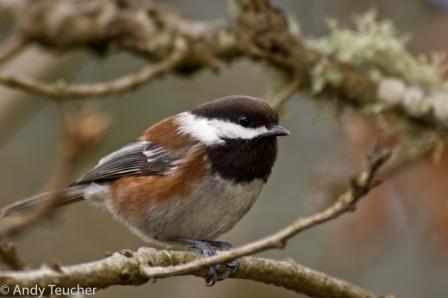
| Scientific Name: | Poecile rufescens (Townsend, 1837) | ||||||||||
|---|---|---|---|---|---|---|---|---|---|---|---|
| English Name: | Chestnut-backed Chickadee | ||||||||||
| Classification / Taxonomy | |||||||||||
| Scientific Name - Concept Reference: | American Ornithologists' Union (AOU). 1998. Check-list of North American birds. Seventh edition. American Ornithologists' Union, Washington, D.C. [as modified by subsequent supplements and corrections published in The Auk]. Also available online: http://www.aou.org/. | ||||||||||
| Classification Level: | Species | ||||||||||
| Species Group: | Vertebrate Animal | ||||||||||
| Species Code: | B-CBCH | ||||||||||
|
|||||||||||
| Conservation Status / Legal Designation | |||||||||||
| Global Status: | G5 (Apr 2016) | ||||||||||
| Provincial Status: | S5 (Mar 2022) | ||||||||||
| BC List: | Yellow | ||||||||||
| Provincial FRPA list: | |||||||||||
| Provincial Wildlife Act: | |||||||||||
| COSEWIC Status: | |||||||||||
| SARA Schedule: | |||||||||||
| General Status Canada: | 4 - Secure (2005) | ||||||||||
| Migratory Bird Convention Act: | Y | ||||||||||
| Ecology & Life History | |||||||||||
| General Description: | |||||||||||
| Global Reproduction Comments: | Clutch size is 5-9 (commonly 6-7). Young are tended by both parents. May nest in loose colonies. | ||||||||||
| Global Ecology Comments: | Often forms flocks of 4-20 individuals during nonbreeding season, often in loose association with other species (juncos, kinglets, nuthatches, etc.). Recent range expansion in the Sierra Nevada was not accompanied by declines in mountain chickadee numbers (Brennan and Morrison 1991). | ||||||||||
| Migration Characteristics: (Global / Provincial) | |||||||||||
|
Nonmigrant: Local Migrant: Distant Migrant: Within Borders Migrant: |
Y / N / N / na / |
||||||||||
| Global Migration Comments: | Wanders irregularly inland after breeding season. | ||||||||||
| Habitats: (Type / Subtype / Dependence) |
Anthropogenic / Urban/Suburban / Facultative - frequent use
Forest / Conifer Forest - Dry / Facultative - occasional use Forest / Conifer Forest - Mesic (average) / Facultative - frequent use Forest / Conifer Forest - Moist/wet / Facultative - frequent use Forest / Deciduous/Broadleaf Forest / Facultative - frequent use Forest / Garry Oak Woodland / Facultative - frequent use Forest / Mixed Forest (deciduous/coniferous mix) / Facultative - frequent use Riparian / Riparian Forest / Facultative - frequent use |
||||||||||
| Global Habitat Comments: |
Coniferous and mixed forest, primarily in humid regions, less frequently in pine forest, oak woodland, pine-oak association, and thickets (AOU 1983). Strongly associated with Douglas-fir in most areas (Brennan and Morrison 1991). In California, planted stands of Monterey pine provided significant foraging habitat during the breeding season (Kleintjes and Dahlsten 1994). On British Columbia mainland, characteristic of moist coniferous forests; on Vancouver Island and Queen Charlotte Islands also in deciduous and mixed forests, suburban and rural residential areas (Campbell et al. 1997). Nests in tree cavities; natural, dug by pair, or old woodpecker hole, usually less than 3 m above ground. |
||||||||||
| Food Habits: |
Frugivore: Adult, Immature
Granivore: Adult, Immature Invertivore: Adult, Immature |
||||||||||
| Global Food Habits Comments: | Eats mainly insects gleaned from twigs, branches, and trunks of trees and shrubs; in the breeding season, forages often on outer foliage (needles, leaves, or buds) (Kleintjes and Dahlsten 1994); also eats spiders, some fruit, conifer seeds (Terres 1980). | ||||||||||
| Global Phenology: |
Diurnal: Adult, Immature
|
||||||||||
| Provincial Phenology: (1st half of month/ 2nd half of month) |
|||||||||||
| Colonial Breeder: | N | ||||||||||
| Length(cm)/width(cm)/Weight(g): | 12/ / 10 | ||||||||||
| Elevation (m) (min / max): |
Global:
Provincial: |
||||||||||
| Distribution | |||||||||||
| Endemic: | N | ||||||||||
| Global Range Comment: | Resident from south-central and southeastern Alaska to western Alberta, south to southern California and northwestern Montana. Wanders irregularly inland after breeding season. Over the past several decades, range has expanded in the San Francisco Bay area and in the Sierra Nevada; no longer appears to be increasing in the Sierra Nevada, but some populations in the San Francisco Bay area apparently are still increasing (Brennan and Morrison 1991). Planted stands of Monterey pine may have contributed to the range expansion in the San Francisco Bay region (Kleintjes and Dahlsten 1994). | ||||||||||
| Authors / Contributors | |||||||||||
| Global Information Author: | HAMMERSON, G., REVISED BY S. CANNINGS | ||||||||||
| Last Updated: | Jan 11, 1995 | ||||||||||
| Provincial Information Author: | |||||||||||
| Last Updated: | |||||||||||
| References and Related Literature | |||||||||||
American Ornithologists' Union (AOU). 1983. Check-list of North American Birds, 6th edition. Allen Press, Inc., Lawrence, Kansas. 877 pp. |
|||||||||||
Brennan, L. A., and M. L. Morrison. 1991. Long-term trends of chickadee populations in western North America. Condor 93:130-137. |
|||||||||||
Campbell, R. W., N. K. Dawe, I. McTaggart-Cowan, J. M. Cooper, G. W. Kaiser, M. C. E. McNall, and G. E. J. Smith. 1997. The birds of British Columbia. Volume 3. Passerines: flycatchers through vireos. University of British Columbia Press, Vancouver. 693 pages. |
|||||||||||
Campbell, R.W., N.K. Dawe, I. McTaggart-Cowan, J.M. Cooper, G.W. Kaiser, M.C.E. McNall and G.E.J. Smith 1997. The Birds of British Columbia, Vol. 3, Passerines: Flycatchers through Vireos. UBC Press in cooperation with Environ. Can., Can. Wildl. Serv. and B.C. Minist. Environ., Lands and Parks, Wildl. Branch. 700pp. |
|||||||||||
Gill, F. B., A. M. Mostrom, and A. L. Mack. 1993. Speciation in North American chickadees: I. Patterns of mtDNA genetic divergence. Evolution 47:195-212. |
|||||||||||
Godfrey, W.E. 1966. The birds of Canada. National Museums of Canada. Ottawa. 428 pp. |
|||||||||||
Harrison, C. 1978. A Field Guide to the Nests, Eggs and Nestlings of North American Birds. Collins, Cleveland, Ohio. |
|||||||||||
Harrison, H. H. 1979. A field guide to western birds' nests. Houghton Mifflin Company, Boston. 279 pp. |
|||||||||||
Kleintjes, P. K., and D. L. Dahlsten. 1994. Foraging behavior and nestling diet of chestnut-backed chickadees in Monterey pine. Condor 96:647-653. |
|||||||||||
Mitchell, W. A. 1988. Songbird nest boxes. Section 5.1.8, US Army Corps of Engineers Wildlife Resources Management Manual. Tech. Rep. EL-88-19. Waterways Expt. Station, Vicksburg, Mississippi. 48 pp. |
|||||||||||
Terres, J. K. 1980. The Audubon Society encyclopedia of North American birds. Alfred A. Knopf, New York. |
|||||||||||
Please visit the website Conservation Status Ranks for definitions of the data fields used in this summary report.
Suggested Citation:
B.C. Conservation Data Centre. 1995. Species Summary: Poecile rufescens. B.C. Minist. of Environment. Available: https://a100.gov.bc.ca/pub/eswp/ (accessed Jun 10, 2026).