
BC Conservation Data Centre: Species Summary
Buteo lagopus
Rough-legged Hawk
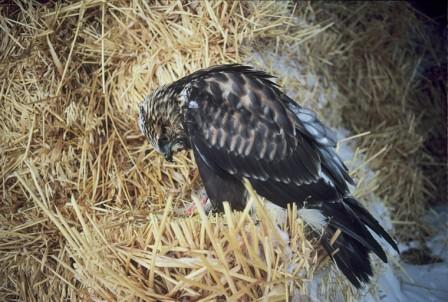
| Scientific Name: | Buteo lagopus (Pontoppidan, 1763) | ||||||||||
|---|---|---|---|---|---|---|---|---|---|---|---|
| English Name: | Rough-legged Hawk | ||||||||||
| Classification / Taxonomy | |||||||||||
| Scientific Name - Concept Reference: | American Ornithologists' Union (AOU). 1998. Check-list of North American birds. Seventh edition. American Ornithologists' Union, Washington, D.C. [as modified by subsequent supplements and corrections published in The Auk]. Also available online: http://www.aou.org/. | ||||||||||
| Classification Level: | Species | ||||||||||
| Species Group: | Vertebrate Animal | ||||||||||
| Species Code: | B-RLHA | ||||||||||
|
|||||||||||
| Conservation Status / Legal Designation | |||||||||||
| Global Status: | G5 (Apr 2016) | ||||||||||
| Provincial Status: | S3N (Mar 2015) | ||||||||||
| BC List: | Blue | ||||||||||
| Provincial FRPA list: | |||||||||||
| Provincial Wildlife Act: | |||||||||||
| COSEWIC Status: | Not at Risk (May 1995) | ||||||||||
| SARA Schedule: | |||||||||||
| General Status Canada: | 4 - Secure (2005) | ||||||||||
| Migratory Bird Convention Act: | |||||||||||
| Ecology & Life History | |||||||||||
| General Description: | |||||||||||
| Global Reproduction Comments: | Egg dates: May-June in Labrador; May-July (peak in May or June in various areas in Alaska and arctic Canada. Average hatching date in southwestern Alaska: mid-June; mid-July in northern Yukon. Clutch size is 2-7, largest when lemmings are abundant). Incubation, mainly by female, lasts 28-31 days. Young are tended by both parents, fly well at about 5-6 weeks; some may be independent a month or less after attaining flight (Palmer 1988). First breeds probably at 2 years. Number of breeding pairs and/or breeding success usually increase with lemming/vole abundance. | ||||||||||
| Global Ecology Comments: | Productivity fluctuates greatly in relation to prey density. Winter territory encompasses about 10-16 sq km (Zarn 1974); may aggregate and roost in groups where food is abundant. Nesting territory probably as small as 5-6 sq km when prey density high (Palmer 1988). | ||||||||||
| Migration Characteristics: (Global / Provincial) | |||||||||||
|
Nonmigrant: Local Migrant: Distant Migrant: Within Borders Migrant: |
N / N / Y / na / |
||||||||||
| Global Migration Comments: | Migrates north from wintering grounds in U.S. March-May; arrives in northern breeding areas in Beaufort Sea area by late April-early May. Southward migration occurs in fall, arriving in the U.S. mostly in September-October; present in southern winter range mostly November-February (Palmer 1988). | ||||||||||
| Habitats: (Type / Subtype / Dependence) |
Agriculture / Cultivated Field / Facultative - occasional use
Agriculture / Hedgerow / Facultative - occasional use Agriculture / Pasture/Old Field / Facultative - occasional use Alpine/Tundra / Alpine Grassland / Unknown Alpine/Tundra / Alpine/Subalpine Meadow / Unknown Anthropogenic / Urban/Suburban / Facultative - occasional use Grassland/Shrub / Grassland / Facultative - frequent use Grassland/Shrub / Meadow / Facultative - frequent use Grassland/Shrub / Sagebrush Steppe / Facultative - frequent use Riparian / Riparian Herbaceous / Facultative - occasional use Wetland / Bog / Facultative - frequent use Wetland / Fen / Facultative - frequent use Wetland / Marsh / Facultative - frequent use Wetland / Swamp / Facultative - frequent use |
||||||||||
| Global Habitat Comments: | Nonbreeding: grasslands, field, marshes, sagebrush flats, and open cultivated areas; sometimes rat-infested garbage dumps. Nests on cliffs (typically) or in trees in arctic and subarctic, in tundra, mountain sides, forests with plenty of open ground. Sometimes nests on the ground or on man-made structures. Apparently nests more commonly along coasts and on marine islands. May compete for nest sites with raven, peregrine falcon, and gyrfalcon (latter two often use nests built by rough-legged hawk). May use same nest in successive years. | ||||||||||
| Food Habits: |
Carnivore: Adult, Immature
|
||||||||||
| Global Food Habits Comments: | Feeds primarily on microtine rodents and other small mammals (lemmings, mice, ground squirrels, cottontails, etc., including carrion); also eats small birds and game birds, in addition to some insects. Hunts in the air, captures most food on the ground. | ||||||||||
| Global Phenology: |
Crepuscular: Adult, Immature
Diurnal: Adult, Immature |
||||||||||
| Global Phenology Comments: | Hunting crepuscular to considerable extent (Palmer 1988). | ||||||||||
| Provincial Phenology: (1st half of month/ 2nd half of month) |
|||||||||||
| Colonial Breeder: | N | ||||||||||
| Length(cm)/width(cm)/Weight(g): | 56/ / 1278 | ||||||||||
| Elevation (m) (min / max): |
Global:
Provincial: |
||||||||||
| Distribution | |||||||||||
| Endemic: | N | ||||||||||
| Global Range Comment: | Panboreal. BREEDS: in Noth America, from Aleutians and western and northern Alaska across low arctic and subarctic Canada. See Bechard and Houston (1984) for erroneous nest records. WINTERS: mainly from southern Canada south to southern California, southern Arizona, southern New Mexico, southern Texas, Missouri, Tennessee, Virginia, casually to eastern Texas and the Gulf Coast. Most numerous in winter in the Great Basin and central and northern Great Plains (Root 1988). | ||||||||||
| Authors / Contributors | |||||||||||
| Global Information Author: | Hammerson, G. | ||||||||||
| Last Updated: | Mar 16, 1994 | ||||||||||
| Provincial Information Author: | |||||||||||
| Last Updated: | |||||||||||
| References and Related Literature | |||||||||||
American Ornithologists' Union (AOU). 1983. Check-list of North American Birds, 6th edition. Allen Press, Inc., Lawrence, Kansas. 877 pp. |
|||||||||||
Bechard, M. J., and C. S. Houston. 1984. Probable identityof purported rough-legged hawk nests in the western U.S. andCanada. Condor 86:348-352. |
|||||||||||
Campbell, R.W., N.K. Dawe, I. McTaggart-Cowan, et al. 1990b. The Birds of British Columbia Vol. 2: Nonpasserines: Diurnal Birds of Prey through Woodpeckers. Royal British Columbia Museum, Victoria, BC. |
|||||||||||
Demarchi, M.W. and M.D. Bently. 2005. Best Management Practices for Raptor Conservation during Urban and Rural Land Development in British Columbia. B.C. Minist. of Environ., Victoria, B.C. MoE BMP Series. |
|||||||||||
Fisher, A.K. 1893. The hawks and owls of the United States in their relation to agriculture. Washington U.S. Dept. of Agriculture Bull. no. 6. 210 pp. |
|||||||||||
Harrison, C. 1978. A Field Guide to the Nests, Eggs and Nestlings of North American Birds. Collins, Cleveland, Ohio. |
|||||||||||
Johnsgard, P. A. 1990. Hawks, eagles, and falcons of North America. Smithsonian Inst. Press, Washington, D.C. xvi + 403 pp. |
|||||||||||
Johnson, S. R. and D. R. Herter. 1989. The Birds of the Beaufort Sea. BP Exploration (Alaska) Inc., Anchorage, Alaska. 372 pp. |
|||||||||||
Palmer, R. S., ed. 1988b. Handbook of North American birds. Vol. 5. Yale Univ. Press, New Haven. 465 pp. |
|||||||||||
Pendleton, B. A. G., B. A. Millsap, K. W. Cline, and D. M. Bird. 1987. Raptor management techniques manual. National Wildlife Federation, Sci. and Tech. Ser. No. 10. 420 pp. |
|||||||||||
Root, T. 1988. Atlas of wintering North American birds: An analysis of Christmas Bird Count data. University of Chicago Press. 336 pp. |
|||||||||||
Terres, J. K. 1980. The Audubon Society encyclopedia of North American birds. Alfred A. Knopf, New York. |
|||||||||||
Titus, K., and M. R. Fuller. 1990. Recent trends in counts of migrant hawks from northeastern North America. Journal of Wildlife Management 54:463-470. |
|||||||||||
Zarn M. 1974. Habitat management series for unique or endangered species, Report No. 14, Rough-legged hawk (BUTEO LAGOPUS SANCTIJOHANNIS). Bureau of Land Management, U.S. Dept. of Int., Technical Note, T-N-270, Denver. |
|||||||||||
Please visit the website Conservation Status Ranks for definitions of the data fields used in this summary report.
Suggested Citation:
B.C. Conservation Data Centre. 1994. Species Summary: Buteo lagopus. B.C. Minist. of Environment. Available: https://a100.gov.bc.ca/pub/eswp/ (accessed Jun 10, 2026).