
BC Conservation Data Centre: Species Summary
Mirounga angustirostris
Northern Elephant Seal
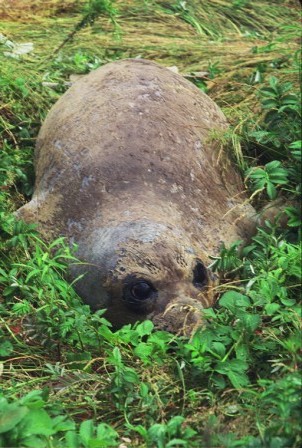
| Scientific Name: | Mirounga angustirostris (Gill, 1866) | ||||||||||
|---|---|---|---|---|---|---|---|---|---|---|---|
| English Name: | Northern Elephant Seal | ||||||||||
| Classification / Taxonomy | |||||||||||
| Scientific Name - Concept Reference: | Wilson, D. E., and D. M. Reeder (editors). 1993. Mammal species of the world: a taxonomic and geographic reference. Second edition. Smithsonian Institution Press, Washington, DC. xviii + 1206 pp. Available online at: http://www.nmnh.si.edu/msw/. | ||||||||||
| Classification Level: | Species | ||||||||||
| Species Group: | Vertebrate Animal | ||||||||||
| Species Code: | M-MIAN | ||||||||||
|
|||||||||||
| Conservation Status / Legal Designation | |||||||||||
| Global Status: | G5 (Apr 2016) | ||||||||||
| Provincial Status: | S1B,S4N (Mar 2022) | ||||||||||
| BC List: | Red | ||||||||||
| Provincial FRPA list: | |||||||||||
| Provincial Wildlife Act: | |||||||||||
| COSEWIC Status: | Not at Risk (May 1986) | ||||||||||
| SARA Schedule: | |||||||||||
| General Status Canada: | |||||||||||
| Ecology & Life History | |||||||||||
| General Description: | Mature males have a large inflatable proboscis and grow to 4+ meters in length and 2,000 kg. Females are smaller (to 3 meters and 600 kg). Newborn pups are about 4 feet (1.25 meters) long and have thick black pelage. | ||||||||||
| Global Reproduction Comments: | Single pup is born late December-February (rarely March), mainly in February. Pups are weaned in 4 weeks. Mating occurs a few days before the pups are weaned, then females go to sea to feed. Most adults vacate the breeding areas by the end of February. Young go to sea at 11-16 weeks, after fasting on beach for several weeks. Relatively few males (mainly 9-11 years old, or younger in newly established colonies) inseminate most of the females. Females produce their first pup usually at 3-5 years. Most females breed annually. Reproductive success increases between maternal ages of 3-7 years, then levels off; however, females breeding at a young age may experience lowered reproductive success later in life (Sydeman et al. 1991). Males live up to 15-16 years; oldest known female was 18 years old. | ||||||||||
| Global Ecology Comments: | Dominance hierarchy forms among males on breeding grounds. Highly gregarious when ashore, during breeding season and when molting. Adult females and juveniles come ashore to molt in spring, males in summer, nonpregnant females and young in fall. Preweaning mortality varies greatly among different colonies, from a few percent to sometimes 76% (see Stewart and Huber 1993 for additional survivorship data). | ||||||||||
| Migration Characteristics: (Global / Provincial) | |||||||||||
|
Nonmigrant: Local Migrant: Distant Migrant: Within Borders Migrant: |
N / Y / Y / na / |
||||||||||
| Global Migration Comments: | Elephant seals make protracted migrations between breeding/molting areas and feeding grounds; over a period of 12 months, they migrate from breeding areas to feeding areas then back to breeding areas (to molt) then back to feeding areas and finally back to breeding areas (to breed); over a year, the distance traveled is about 20,000 km (Stewart and DeLong 1995). From San Miguel Island, adult females move to feeding areas at latitudes of but far away from Oregon and Washington; adult males move north to Alaska when not breeding or molting (Stewart and DeLong 1995). Many weaned pups leave breeding grounds in April, diperse north as far as Vancouver Island, return to central California coast in September. Young from southern California rookeries may move north to central California, return to island of birth to molt in spring of next year. | ||||||||||
| Habitats: (Type / Subtype / Dependence) |
Ocean / Marine Island / Facultative - frequent use
Ocean / Pelagic / Facultative - frequent use Ocean / Sheltered Waters - Marine / Facultative - frequent use Other Unique Habitats / Beach / Facultative - occasional use |
||||||||||
| Global Habitat Comments: |
Northern elephant seals feed at sea (temperate and subtropical) and use beaches for breeding and molting. In California, elephants seals occupy beaches of continental islands and the mainland during breeding (winter) and molting (spring, summer) periods; also a peak in abundance on shore occurs in October when resting females, pups of the year, and some juveniles haul out briefly. When at sea, elephant seals spend little time at the surface; commonly they are at depths of several hundred meters. Young are born on beaches of continental islands and mainland (Ano Nuevo, Point Reyes). Young stay ashore 2-3 months after weaning, leave beaches by end of April. Females generally return to natal area to breed, but some emigrate to other sites hundreds of kilometers away. |
||||||||||
| Provincial Habitat Comments: | Marine | ||||||||||
| Food Habits: |
Invertivore: Adult, Immature
Piscivore: Adult, Immature |
||||||||||
| Global Food Habits Comments: | Eats cephalopods, Pacific hake and other teleosts, various cartilaginous fishes, and jawless fishes (Condit and Le Boeuf 1984). Preys mostly on mesopelagic squid; also apparently feeds commonly on bottom in deep water; commonly dives to several hundred meters. Males do not feed during breeding season. Northern elephant seals are exceptional divers. When foraging on fishes and squid, they sometimes dive deeper than 1,500 meters and can remain submerged for 1-2 hours. After weaning her pup, a female goes to sea and spends 83-90% of her time underwater. |
||||||||||
| Global Phenology: | |||||||||||
| Global Phenology Comments: | Adult females and juveniles return to shore to molt in April-May. Males return to beaches to molt in late spring and summer. After molting, seals go to sea again to feed before returning once again to the breeding beaches. | ||||||||||
| Provincial Phenology: (1st half of month/ 2nd half of month) |
|||||||||||
| Colonial Breeder: | Y | ||||||||||
| Length(cm)/width(cm)/Weight(g): | 650/ / 3500000 | ||||||||||
| Elevation (m) (min / max): |
Global:
Provincial: |
||||||||||
| Distribution | |||||||||||
| Endemic: | N | ||||||||||
| Global Range Comment: | Northern elephant seals range widely in the North Pacific (regularly north to British Columbia), with males ranging farther north (as far as Gulf of Alaska and Aleutian Islands) than females. Breeding sites are distributed on islands and the mainland from the central Baja California coast north to California, including islas Guadalupe, San Benito, Cedros, Natividad (few), San Martin (few), and Coronado (few) in Mexico; and Santa Barbara, San Nicolas, San Miguel, Santa Rosa, San Clemente (few), Ano Nuevo, and Southeast Farallon islands, and Ano Nuevo Point, Point Reyes, and Piedras Balncas, in the United States; recently, pupping was observed at Shell Island, Oregon (Hodder et al. 1998). Largest breeding colony is on Guadalupe Island off Baja. Has strayed to Midway Island, Hawaii (Tomich 1986) and to a small island near Japan. | ||||||||||
| Authors / Contributors | |||||||||||
| Global Information Author: | Hammerson, G. | ||||||||||
| Last Updated: | Feb 02, 2010 | ||||||||||
| Provincial Information Author: | |||||||||||
| Last Updated: | |||||||||||
| References and Related Literature | |||||||||||
Banfield, A. W. F. 1974. The mammals of Canada. University of Toronto Press, Toronto, Canada. 438 pp. |
|||||||||||
Bodkin, J. L., R. J. Jameson, and G. R. Van Blaricom. 1985. Pup production, abundance, and breeding distribution of northern elephant seals on San. Nicholas Island, winter, 1981. California Fish & Game 71:53-59. |
|||||||||||
Condit, R., and B. J. Le Boeuf. 1984. Feeding habits and feeding grounds of the northern elephant seal. J. Mamm. 65:281-290. |
|||||||||||
Cooper, C. F., and B. S. Stewart. 1983. Demography of northern elephant seals, 1911-1982. Science 219:969-971. |
|||||||||||
Huber, H. R. 1987. Natality and weaning success in relation to age of first reproduction in northern elephant seals. Can. J. Zool. 65:1311-1316. |
|||||||||||
Huber, H. R., A. C. Rovetta, L. A. Fry, and S. Johnston. 1991. Age-specific natality of northern elephant seals at the South Farallon Islands, California. J. Mammalogy 72:525-534. |
|||||||||||
Ingles, L. G. 1965. Mammals of the Pacific States. Stanford University Press, Stanford, California. |
|||||||||||
Le Boeuf, B. J. 1985. Elephant seals. Boxwood Press, Pacific Grove, California. 48 pp. |
|||||||||||
Le Boeuf, B. J., and R. M. Laws, editors. Elephant seals: population ecology, behavior, and physiology. Univ. California Press. 450 pp. |
|||||||||||
Ridgway, S. H., and R. J. Harrison. 1981. Handbook of Marine Mammals. Volume 2. Seals. Academic Press, New York, New York. 359 pp. |
|||||||||||
Riedman, M. 1990a. The Pinnipeds: Seals, Sea Lions and Walruses. University of California Press, Berkeley, California. xxiii + 439 pp. |
|||||||||||
Stewart, B. S., and H. R. Huber. 1993. Mirounga angustirostris. Am. Soc. Mamm., Mammalian Species No. 449:1-10. |
|||||||||||
Stewart, B. S., and R. L. DeLong. 1995. Double migrations of the northern elephant seal, Mirounga angustirostris. Journal of Mammalogy 76:196-205. |
|||||||||||
Sydeman, W. J., et al. 1991. Age-specific weaning success of northern elephant seals in relation to previous breeding experience. Ecology 72:2204-2217. |
|||||||||||
Tomich, P. Q. 1986. Mammals in Hawai'i. A synopsis and notational bibliography. Second edition. Bishop Museum Press, Honolulu. 375 pp. |
|||||||||||
Please visit the website Conservation Status Ranks for definitions of the data fields used in this summary report.
Suggested Citation:
B.C. Conservation Data Centre. 2010. Species Summary: Mirounga angustirostris. B.C. Minist. of Environment. Available: https://a100.gov.bc.ca/pub/eswp/ (accessed Dec 28, 2025).