
BC Conservation Data Centre: Species Summary
Accipiter striatus
Sharp-shinned Hawk
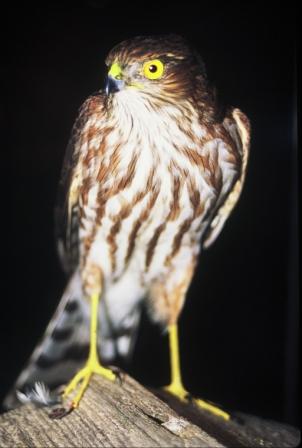
| Scientific Name: | Accipiter striatus Vieillot, 1808 | ||||||||||
|---|---|---|---|---|---|---|---|---|---|---|---|
| English Name: | Sharp-shinned Hawk | ||||||||||
| Classification / Taxonomy | |||||||||||
| Scientific Name - Concept Reference: | American Ornithologists' Union (AOU). 1998. Check-list of North American birds. Seventh edition. American Ornithologists' Union, Washington, D.C. [as modified by subsequent supplements and corrections published in The Auk]. Also available online: http://www.aou.org/. | ||||||||||
| Classification Level: | Species | ||||||||||
| Species Group: | Vertebrate Animal | ||||||||||
| Species Code: | B-SSHA | ||||||||||
|
|||||||||||
| Conservation Status / Legal Designation | |||||||||||
| Global Status: | G5 (Apr 2016) | ||||||||||
| Provincial Status: | S5B,S5N (Mar 2015) | ||||||||||
| BC List: | Yellow | ||||||||||
| Provincial FRPA list: | |||||||||||
| Provincial Wildlife Act: | |||||||||||
| COSEWIC Status: | Not at Risk (May 1997) | ||||||||||
| SARA Schedule: | |||||||||||
| General Status Canada: | 4 - Secure (2005) | ||||||||||
| Migratory Bird Convention Act: | |||||||||||
| Ecology & Life History | |||||||||||
| General Description: | |||||||||||
| Global Reproduction Comments: | Clutch size commonly is 4-5 (but average 2.6 in Puerto Rico). Incubation lasts 30-32 days (34-35 days also reported), mainly by female (male brings food). Young fledge at 3-4.5 weeks, independent at about 7 weeks. First breeds: usually 2 years (sometimes as yearling). | ||||||||||
| Global Ecology Comments: | In Puerto Rico, breeding density in suitable habitat 1 individual per sq km (Delannoy and Cruz 1988); average distance between nests was 4.3 km in Oregon (see Palmer 1988). | ||||||||||
| Migration Characteristics: (Global / Provincial) | |||||||||||
|
Nonmigrant: Local Migrant: Distant Migrant: Within Borders Migrant: |
Y / Y / Y / na / |
||||||||||
| Global Migration Comments: | Northern populations are migratory, usually arrive in nesting areas by April-May; southward migration occurs August-October in Canada and northern U.S. Arrives in Costa Rica by mid-October, remains until March (Stiles and Skutch 1989). High proportion of birds banded in Minnesota were recovered in Mexico and Central America in late fall-winter. See Palmer (1988) for more detail. Often aggregates during migration. | ||||||||||
| Habitats: (Type / Subtype / Dependence) |
|||||||||||
| Global Habitat Comments: |
Forest and open woodland, coniferous, mixed, or deciduous, primarily in coniferous in more northern and mountainous portion of range (AOU 1983). Primary habitat is boreal forest, with the greatest nesting densities occurring in eastern Canada. Young, dense, mixed or coniferous woodlands are preferred for nesting (Platt 1976, Reynolds et al. 1982, Meyer 1987). Where conifers are scarce, as in the prairie regions, cottonwoods, poplars, and other members of the Betulaceae may be used (Bent 1937). Migrates through various habitats, mainly along ridges, lakeshores, and coastlines (NGS 1983). Nests usually in tree crotch or on branch next to trunk, most often 3-18 m up, hidden by thick foliage, usually in conifer in north. May build new nest, reuse old one, or modify old bird or squirrel nest. Nests generally seem to be in a stand of dense conifers near a forest opening, though this may reflect observer bias (Meyer 1987). Pairs apparently remain faithful to nesting areas for several years, although a new nest is usually constructed each season. However, this may not be universally true (Herron et al., 1985, stated that pairs are not faithful to a nest site). In Nevada, nesting occurs at elevations of 6500-9000 feet, intermediate between Cooper's below, and goshawks above (Herron et al. 1985). One study quantified habitat parameters for nest sites in pine plantations in Missouri (Wiggers and Kritz 1991). The nest sites were characterized as medium age (25-49 yr), with high tree density (1370 trees/ha), basal area (37 sq m per ha), and percentage canopy coverage (82%). Nest trees were usually of normal growth form and nests were in the canopy. In this study, Cooper's hawks also nested in the same type of habitat, with essentially the same characteristics, but chose deformed nest trees most often and placed nests below canopy. Sharp-shin nesting sites were in stands averaging 11.8 ha compared to an average of 4.1 ha for Cooper's hawks in pine stands or 53 ha for Cooper's in hardwood habitat (Wiggers and Kritz 1991). The foraging habitat during the breeding season is essentially the same as that chosen for nesting, and the birds appear to avoid open, deciduous forests, at least in Canada (Meyer 1987). During the winter, however, the males tend to hunt most frequently along hedgerows, field edges and other ecotonal habitats, while females usually stick to extensive stands of forest or riparian areas (Meyer 1987). |
||||||||||
| Food Habits: |
Carnivore: Adult, Immature
|
||||||||||
| Global Food Habits Comments: | Eats mainly small to medium-sized birds; occasionally small mammals, insects, lizards, etc. Hunts from inconspicuous perch or by stealthy flights along paths and around bushes and trees (Evans 1982). In Colorado, nestling and fledgling birds were common prey items when hawks were feeding young (Joy et al., 1994, Condor 96:455-467). | ||||||||||
| Global Phenology: |
Diurnal: Adult, Immature
|
||||||||||
| Provincial Phenology: (1st half of month/ 2nd half of month) |
|||||||||||
| Colonial Breeder: | N | ||||||||||
| Length(cm)/width(cm)/Weight(g): | 36/ / 174 | ||||||||||
| Elevation (m) (min / max): |
Global:
Provincial: |
||||||||||
| Distribution | |||||||||||
| Endemic: | N | ||||||||||
| Global Range Comment: | BREEDS: western and central Alaska to northern Saskatchewan, southern Labrador, and Newfoundland, south to South America. NORTHERN WINTER: north to southern Alaska and southern Canada (casually). U.S. and Canadian populations winter south to Panama and West Indies. RESIDENT populations occur in Middle and South America (northwestern Venezuela, south in Andes to northern Argentina; Paraguay to southeastern Brazil, Uruguay) and Puerto Rico (AOU 1983, Sibley and Monroe 1990). | ||||||||||
| Authors / Contributors | |||||||||||
| Global Information Author: | Hammerson, G. | ||||||||||
| Last Updated: | Mar 29, 1995 | ||||||||||
| Provincial Information Author: | |||||||||||
| Last Updated: | |||||||||||
| References and Related Literature | |||||||||||
American Ornithologists' Union (AOU). 1983. Check-list of North American Birds, 6th edition. Allen Press, Inc., Lawrence, Kansas. 877 pp. |
|||||||||||
Bent, A.C. 1937. Life histories of North American birds of prey. Part 1. Bull. U.S. Natl. Mus. 137. 409 pp. |
|||||||||||
Campbell, R.W., N.K. Dawe, I. McTaggart-Cowan, et al. 1990b. The Birds of British Columbia Vol. 2: Nonpasserines: Diurnal Birds of Prey through Woodpeckers. Royal British Columbia Museum, Victoria, BC. |
|||||||||||
Delannoy, C. A., and A. Cruz. 1988. Breeding biology of the Puerto Rican sharp-shinned hawk (ACCIPITER STRIATUS VENATOR). Auk 105:649-662. |
|||||||||||
Demarchi, M.W. and M.D. Bently. 2005. Best Management Practices for Raptor Conservation during Urban and Rural Land Development in British Columbia. B.C. Minist. of Environ., Victoria, B.C. MoE BMP Series. |
|||||||||||
Ehrlich, P. R., D. S. Dobkin, and D. Wheye. 1992. Birds in Jeopardy: the Imperiled and Extinct Birds of the United States and Canada, Including Hawaii and Puerto Rico. Stanford University Press, Stanford, California. 259 pp. |
|||||||||||
Evans, D. L. 1982. Status reports on twelve raptors. U.S. Department of the Interior, Fish and Wildlife Service, Special Scientific Report No. 238. 68 pp. |
|||||||||||
Fisher, A.K. 1893. The hawks and owls of the United States in their relation to agriculture. Washington U.S. Dept. of Agriculture Bull. no. 6. 210 pp. |
|||||||||||
Hilty, S.L. and W. L. Brown. 1986. A Guide to the Birds of Colombia. Princeton University Press, Princeton, USA. 836 pp. |
|||||||||||
International Council for Bird Preservation. Red Data Book. |
|||||||||||
Johnsgard, P. A. 1990. Hawks, eagles, and falcons of North America. Smithsonian Inst. Press, Washington, D.C. xvi + 403 pp. |
|||||||||||
Kirk, D. A., D. Hussell, and E. Dunn. 1995. Raptor population status and trends in Canada. Bird Trends (Canadian Wildlife Service) 4:2-9. |
|||||||||||
National Geographic Society (NGS). 1983. Field guide to the birds of North America. National Geographic Society, Washington, DC. |
|||||||||||
Palmer, R. S., editor. 1988a. Handbook of North American birds. Vol. 4. [Diurnal raptors, part 1]. Yale University Press, New Haven, CT. vii + 433 pp. |
|||||||||||
Pendleton, B. A. G., B. A. Millsap, K. W. Cline, and D. M. Bird. 1987. Raptor management techniques manual. National Wildlife Federation, Sci. and Tech. Ser. No. 10. 420 pp. |
|||||||||||
Peterjohn, B. G., J. R. Sauer, and W. A. Link. 1994. The 1992 and 1993 summary of the North American Breeding Bird Survey. Bird Populations 2:46-61. |
|||||||||||
Raffaele, H. A. 1983a. A guide to the birds of Puerto Rico and the Virgin Islands. Fondo Educativo Interamericano, San Juan, Puerto Rico. 255 pp. |
|||||||||||
Sibley, C.G., and B.L. Monroe, Jr. 1990. Distribution and Taxonomy of Birds of the World. Yale University Press, New Haven, CT. xxiv + 1111 pp. |
|||||||||||
Stiles, F. G. and A. F. Skutch. 1989. A guide to the birds of Costa Rica. Cornell University Press, Ithaca, New York, USA. 511 pp. |
|||||||||||
Terres, J. K. 1980. The Audubon Society encyclopedia of North American birds. Alfred A. Knopf, New York. |
|||||||||||
Titus, K., and M. R. Fuller. 1990. Recent trends in counts of migrant hawks from northeastern North America. Journal of Wildlife Management 54:463-470. |
|||||||||||
Wiley, J. W. 1985c. Bird conservation in the United States Caribbean. Pages 107-159 in Temple, S. A., editor. Bird conservation 2. Univ. Wisconsin Press, Madison. 181 pp. |
|||||||||||
Please visit the website Conservation Status Ranks for definitions of the data fields used in this summary report.
Suggested Citation:
B.C. Conservation Data Centre. 1995. Species Summary: Accipiter striatus. B.C. Minist. of Environment. Available: https://a100.gov.bc.ca/pub/eswp/ (accessed Jun 10, 2026).